
When you think of diamonds, expensive jewelry might come to mind at first. However, the true value of diamonds lies in their industrial applications. In fact, approximately 80% of the diamonds mined and manufactured worldwide are used in industrial sectors. As a result, diamonds have become indispensable materials for efficient in modern manufacturing. This guide will introduce the diverse industrial applications of diamonds and help you select the right tools for your projects.
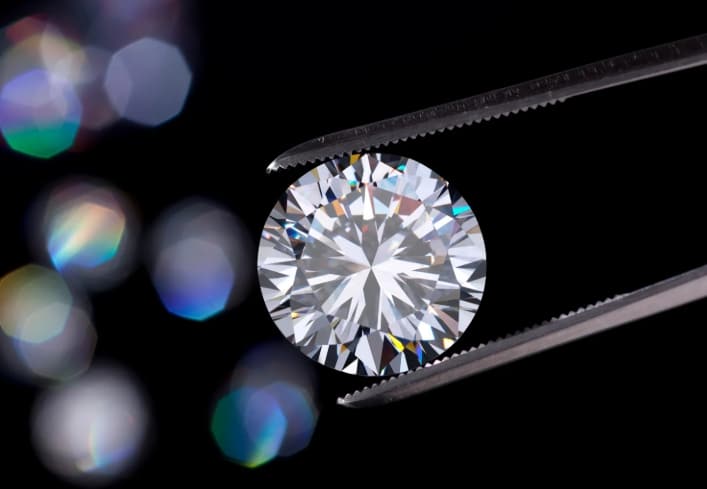
Why Does Modern Industry Rely on Diamonds
In industry, professionals highly value the exceptional material properties of diamond. It plays an irreplaceable role in many manufacturing processes.
Unparalleled Hardness
Diamond is the hardest natural material known, scoring a perfect 10 on the Mohs hardness scale. This exceptional hardness enables diamond tools to cut, grind, and shape extremely hard materials such as metals, stone, concrete, and ceramics.
Excellent Thermal Stability
During high-speed machining, intense friction generates significant heat. Fortunately, diamond can withstand high temperatures while maintaining structural integrity. Consequently, diamond cutting tools maintain high performance even under extreme conditions. This thermal stability ensures machining precision and extends tool life.
Pro Tip: Why Diamond Cannot Cut Ferrous Metals
Although diamond tools are extremely strong, they should never be used to cut ferrous metals such as steel. At high temperatures, the carbon in the diamond reacts chemically with the iron. It will cause rapid tool wear or complete failure.
Practical Guide: Quick Material Compatibility Reference
Ideal for diamond tools: Concrete, granite, marble, glass, ceramics, silicon wafers.
Avoid using (use carbide/PCBN instead): Steel, iron, cast iron, ferroalloys.
Natural vs. Synthetic Industrial Diamonds
Many people wonder where industrial diamonds come from. In the past, diamond tools relied entirely on mined natural diamonds. While natural diamonds are hard, their shape, purity, and crystal structure often vary. Today, manufacturers almost produce industrial diamonds in laboratories, primarily using High-Pressure High-Temperature (HPHT) or Chemical Vapor Deposition (CVD) technologies. These methods can replicate the physical properties of natural diamonds.
Why has this shift occurred? The key lies in modern industry that demands consistency and stability. Natural diamonds contain natural cracks and impurities, making them more prone to unpredictable fracturing during high-speed machining. In contrast, the synthetic diamonds have a more controllable structure. Therefore, when evaluating diamonds for modern industrial applications, synthetic diamonds often offer significant advantages.
| Characteristic Evaluation | Natural Industrial Diamonds | Synthetic Industrial Diamonds |
|---|---|---|
| Crystal Shape | Irregular, difficult to standardize | Precise and controllable for various tool requirements |
| Consistency | Significant batch variation, inconsistent performance | Highly consistent cutting performance |
| Purity and impurities | Contains natural cracks and impurities | High purity with a stronger structure |
| Procurement Costs | High mining costs, price fluctuations | Lower costs, stable prices and supply |
Why the Manufacturing Industry Prefers Lab-Grown Diamonds
As shown above, the manufacturing industry prefers synthetic diamonds over natural diamonds for very practical reasons. First, engineers can precisely control the shape, size, and hardness for specific materials. Second, lab-grown diamonds offer highly consistent quality between batches. Finally, they are more cost-effective and have a more reliable supply chain. This ensures diamond cutting tools always perform at their best.
Core Diamond Cutting Tools and Abrasives
Manufacturing cutting tools is one of the most common industrial applications of diamonds.
Diamond Cutting Tools: Drill Bits and Saw Blades
These tools are designed for demanding applications. Construction workers use diamond drill bits to bore holes in concrete and stone. They remain sharp for periods, making them ideal for heavy-duty operations. Similarly, contractors rely on diamond saw blades to cut hard materials. These blades offer clean, precise cuts while minimizing wear.
Diamond Grinding Discs and Polishing Pads
Surface finishing demands extreme precision, which is why workers often rely on diamond abrasives. By using high-quality diamond grinding discs, you can achieve a smoother concrete floor. In addition, these discs can shape and polish metal parts with exceptional accuracy.
Practical Guide: Tool Selection Checklist
Need to drill deep holes in concrete? Choose a diamond drill bit.
Need to cut granite or asphalt slabs? Choose a diamond saw blade.
Need to polish concrete or stone surfaces? Use diamond polishing pads or soft grinding discs.
High-Tech and Advanced Applications
Beyond construction, diamonds are also driving innovation in modern high-tech industry.
Semiconductor Manufacturing
The high-tech sector relies on diamond tools for semiconductor manufacturing. Manufacturers use them to cut and process silicon wafers. These silicon wafers are a critical component of modern electronic devices. Therefore, the extreme precision of diamond tools minimizes waste and ensures high-quality production.
Optical Material Processing
Optical processing also benefits from the hardness of diamond. Technicians use diamond polishing pads to polish optical lenses to the required clarity. This ensures optimal performance, ranging from everyday eyeglasses to high-end camera lenses.
Uses of Diamonds in the Medical Field
The uses of diamonds in industry extend directly into the critical field of healthcare
Precision Surgical Blades
Surgeons rely on diamond surgical blades for precise incisions. Diamond’s extreme hardness ensures exceptionally smooth and clean cuts. Consequently, this minimizes tissue damage. Additionally, diamond surgical blades stay sharp much longer than traditional steel blades. This reduces the need for frequent blade changes and shortens patient recovery times.
Medical Device Coatings
In addition to surgical instruments, manufacturers apply diamond coatings to medical devices. This application enhances durability. The coating protects medical devices from daily wear and tear. Furthermore, diamond is chemically inert. This provides corrosion resistance, ensuring that medical equipment remains sterile and safe over time.
Conclusion
The secret to effectiveness of diamond lies in its exceptional physical properties. The diverse industrial applications of diamond highlight its value across many sectors. From heavy-duty cutting tools and grinding wheels to high-tech manufacturing processes, diamond enhances efficiency, precision, and durability. As modern industry continues to evolve, the demand for diamond tools will steadily grow. Gaining a deeper understanding of these industrial applications will help you optimize manufacturing processes.
If you’re looking to boost project efficiency with top rated tools, we’re here to help. Consult our experts today to find the perfect solution for your specific machining needs. Browse our full range of diamond saw blades and grinding discs to get a detailed quote for your business.
Frequently Asked Questions
Are industrial diamonds real diamonds?
Yes, they are genuine diamonds. Whether naturally mined or lab-grown, they share the exact same chemical composition (pure carbon) and crystal structure.
How long do diamond cutting tools typically last?
They last significantly longer than traditional tools. Depending on the material being processed, diamond tools typically last several to hundreds of times longer than carbide tools. As a result, they offer unmatched long-term cost-effectiveness.
Why are diamonds used in industry rather than just for jewelry?
Diamonds are widely used in industry because of their hardness, thermal stability, wear resistance, and precision machining capabilities. These properties make them ideal for cutting, grinding, polishing, drilling, semiconductor manufacturing, medical devices, and other industrial applications.
Post time: Oct-25-2024