
Professional stone finishers and contractors face complex stone restoration projects daily. In these fast-paced projects, traditional trial-and-error polishing methods are clearly ineffective. To ensure profitability and on-time delivery, you must understand precisely how to polish granite countertops efficiently. A dull or scratched surface will affect the final result, so reliable techniques are essential to ensure perfect outcomes.
Learning how to polish granite countertops requires precise handling and the right abrasive technique. Inappropriate tool selection not only wastes time but also reduces project profitability. With over 20 years of manufacturing experience, Z-LION Diamond Tools understands these challenges. We design high-performance, flexible diamond abrasives to optimize your workflow.
This guide provides a comprehensive overview of how to polish granite countertops. You will learn professional techniques, proper tool selection, and feasible troubleshooting steps. As a result, it will enable you to confidently tackle any stone restoration project.
What is Granite Countertop Polishing
It is crucial to understand the principles of stone restoration. You can’t simply repair deep scratches by applying chemicals. Instead, you need to understand the physical processes involved.
What Happens During Granite Polishing
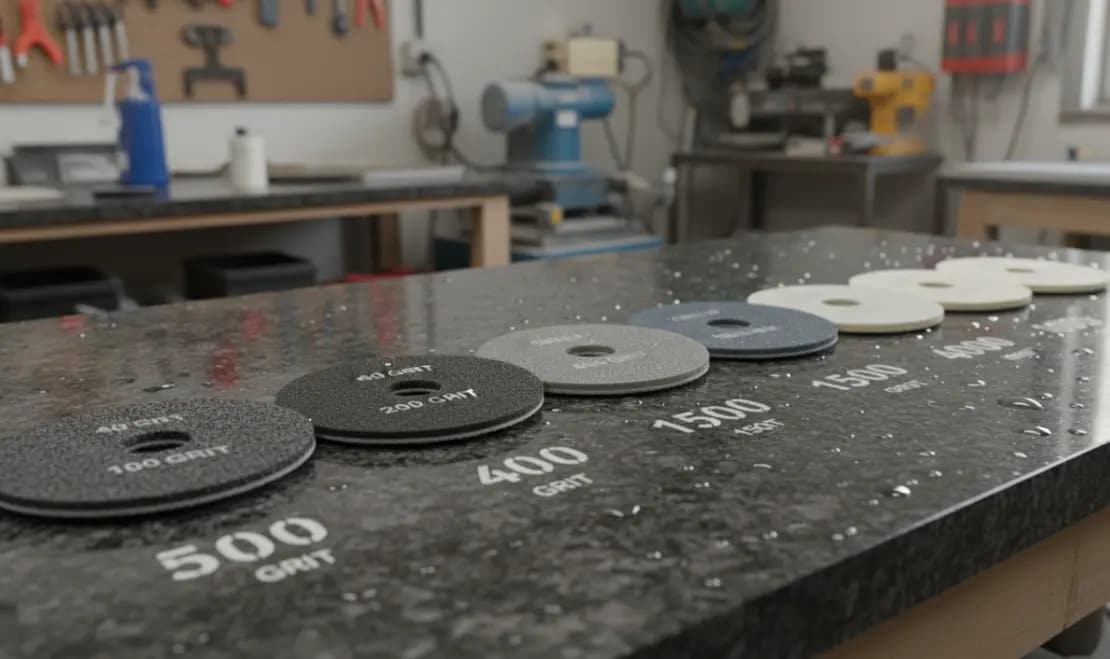
Polishing granite countertops is a rigorous mechanical process. You use abrasive materials to remove the microscopic layers of the stone. First, coarse abrasives remove damage. Next, fine abrasives smooth the surface. Finally, through high-friction polishing, you can create a mirror-like shine. Therefore, learning how to polish granite countertops means mastering the step-by-step application of friction and abrasives.
Polishing vs Cleaning vs Sealing
Professionals often confuse these three different maintenance steps. Cleaning simply removes dirt and grease from the surface. Sealing, on the other hand, applies a protective chemical barrier to prevent stains. Polishing, unlike this, is a process that physically alters the surface of the stone. You must polish the stone before applying any sealant.
When Do Granite Countertops Need Polishing
Identifying when surface repair is needed is crucial. Unnecessary grinding wastes material, while waiting too long can lead to serious damage.
Signs of Dull or Worn Granite
Identifying a worn surface is quite simple. First,check the light reflection. A healthy countertop reflects light clearly from above, while a dull granite surface will scatter it. Additionally, you’ll likely feel a rough texture, and water will stop beading on the surface. These signs present that you need to make a polishing of your granite countertop.
Common Causes of Dull Granite
Several factors can diminish the shine of a stone. Daily mechanical wear and tear weakens the surface. Furthermore, acidic cleaners can etch the stone over time. Hard water deposits can also cause a dull appearance. Over time, the accumulation of these minerals can cause permanent damage to the surface. Therefore, you must address these issues promptly.
What Do You Need to Polish Granite Countertops?
Your success depends entirely on your equipment. Inferior tools will result in uneven polishing. Therefore, you must purchase professional abrasives.
Essential Polishing Tools
You need a complete tool system to achieve perfect polishing results. First, you need high-quality diamond polishing pads, which handle heavy mechanical work. Additionally, sanding belts and specialized discs help handle complex curves. For tight corners, you must rely on diamond hand polishing pads. Our brand Z-LION specializes in manufacturing these tools to significantly reduce your processing time.
Polishing Compounds and Chemicals
Mechanical abrasives do most of the work, but you’ll need a special compound for the final step. The polishing powder reacts chemically with the stone to produce a brilliant shine. You must mix this powder with water to form a slurry, and then apply the slurry to the stone using a polishing pad.
Manual vs Machine Tools for Polishing Countertops
You’ll need to choose between hand tools and power tools. Hand polishing pads are best suited for quick repairs, while power tools, such as variable-speed grinders, are better for working on large surfaces. Professionals often use both types of tools simultaneously, so your toolkit must include a variety of options.
How to Polish Granite Countertops Step by Step
Follow these step-by-step guide to get professional polishing results. Don’t rush the process.
Surface Preparation
First, clean the surface. You must remove all grease, dirt, and old sealant. Use a commercial stone cleaner. Next, completely dry the countertop with a microfiber cloth. Seal the surrounding cabinets and walls with tape to protect the work area from the abrasive slurry.
Grinding and Smoothing Granite Countertops
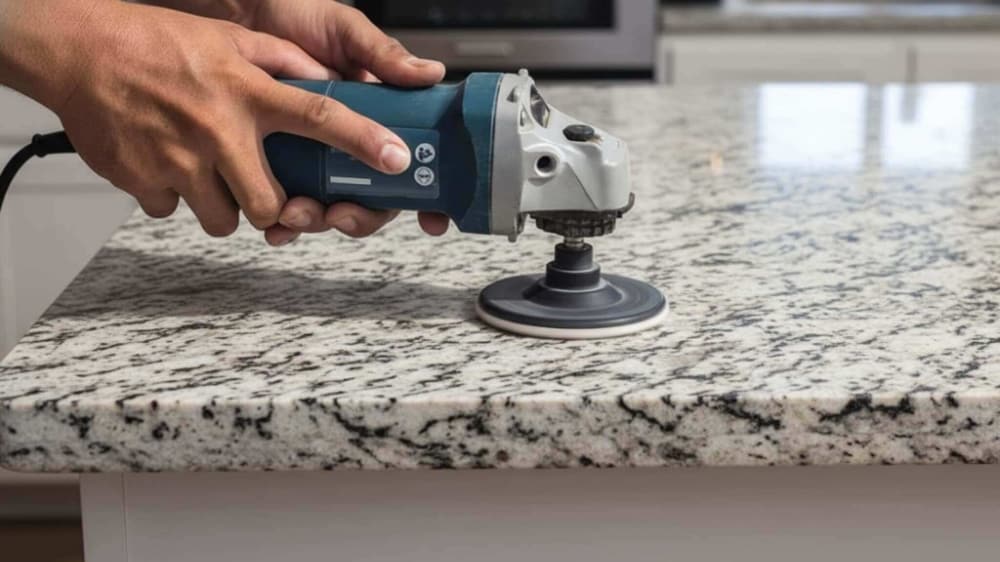
Carefully assess the extent of the damage. Deep scratches require regrinding. First, use a 50 grit diamond grinding disc, mounted on a variable-speed grinder. Keep the speed low. Next, move the grinder in overlapping circular motions. You must keep the surface moist to prevent heat damage.
Polishing with Diamond Pads
This is the most crucial stage in polishing granite countertops. You must follow a strict abrasive progression.
- Begin rough sanding: Use a 100 grit pad to remove scratches left by a 50 grit pad.
- Medium grinding: Next, use 200 and 400 grit grinding pads, and the surface will begin to become smooth.
- Fine grinding: Then, switch to the 800 and 1500 grit grinding pads and you will see a subtle shine.
- Ultra-fine grinding: Finally, use a 3000 grit grinding pad. Always clean the surface each time you change the abrasive to prevent the coarse abrasive from creating new scratches.
Final Buffing to Make Granite Countertops Shine Naturally
After using the 3000 grit polishing pad, you will need to do a final polishing. Apply a special polishing compound. Using a white polishing pad on a polisher, apply the compound evenly to the stone until it dries. This will give you a deep, natural mirror-like shine.
How to Polish Granite Countertops by Hand vs Grinder
You must understand which approach is best suited for your project. Below is a direct comparison to guide your work.
How to Polish Granite Countertops by Hand (DIY & Small Areas)
Learning how to polish granite countertops by hand is useful for minor repairs. You can use electroplated diamond hand pads. First, wet the target area. Next, rub the polishing pad back and forth over the scratches. Follow the same abrasive progression (from 50 to 3000). While this method is more time-consuming, it provides greater control when working on edges.
Key Differences in Results and Efficiency
| Feature | Polishing by Hand | Polishing with a Grinder |
|---|---|---|
| Best Application | Tight corners, minor repairs | Large surfaces, deep scratch removal |
| Speed | Very slow | Extremely fast |
| Skill Level Required | Low | High (Risk of uneven gouging) |
| Cost | Low initial tool cost | Higher investment (Grinder + Pad sets) |
How to Polish Granite Countertop Edges After Cutting
Stone finishers face unique challenges when dealing with the edges of stone. Freshly cut edges often appear dull and rough, so you need to restore them to match the countertop surface.
Edge Polishing Techniques
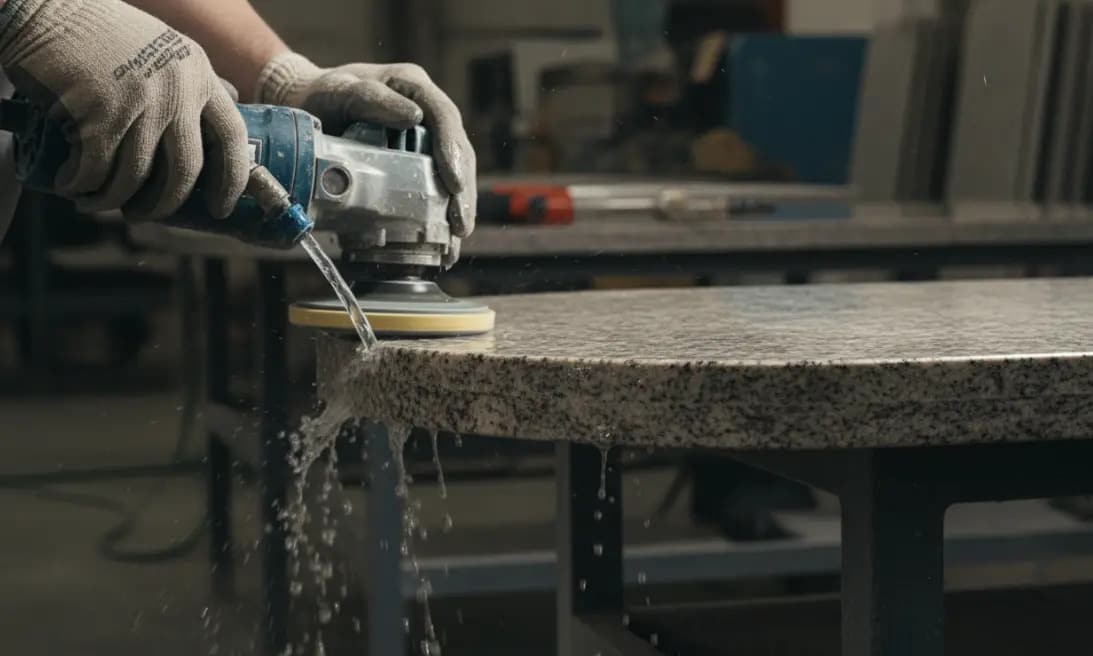
For polishing granite edges after cutting, you’ll need professional techniques. First, ensure the stone slab is securely fixed. Next, use a router to shape the edge contour. Then, begin your diamond polishing process. During polishing, it’s crucial to keep the grinder perfectly flat against the profile curve; otherwise, the edge shape will be distorted.
Polishing After Cutting or Fabrication
Learning how to polish granite countertops after cutting requires immediate attention. The freshly cut edges expose the raw stone matrix. Begin by removing saw marks with a 50 grit polishing pad, then gradually increase to a 3000 grit pad. Throughout this process, be sure to use ample water to cool the diamond resin and extend the tool life.
Common Mistakes on Edges
Many operators apply excessive pressure to the edges, which causes the resin pads to overheat. As a result, the black stains leave on the stone. Additionally, skipping the grits on edge leaves noticeable swirl marks. Please always let the tool do its job on its own.
How to Restore Shine to Dull or Old Granite Countertops
For older installations, you will need to use a different assessment strategy. First, you must determine the depth of the damage.
Light Restoration (Surface Dullness)
Typically, you only need to know how to polish dull granite countertops with light wear. The stone may only be affected by hard water and minor scratches, so you can skip the aggressive polishing steps. You can start with a 400 or 800 grit polishing pad and finish with polishing powder. This will quickly restore the factory shine.
Deep Restoration (Scratches / Damage)
When dealing with severely damaged old granite countertops, the situation becomes more complex. Deep scratches require a complete restoration. You must start with a 50 grit sanding pad and gradually sand the surrounding stone until it’s flush with the scratch. Therefore, this requires extreme patience and specialized equipment.
Common Mistakes to Avoid When Polishing Granite
Even experienced professionals make mistakes. Avoid these common mistakes to maintain high-quality polishing results.
Choose the Wrong Polishing Tools
Using cheap, rigid pads on curved surfaces will result in immediate failure. You must use flexible diamond abrasive. Furthermore, wet grinding with dry pads will quickly damage the pads. Always ensure that tool specifications are appropriate for the environment.
Skip Grit Levels During Sanding
Skipping a grit level is the most common mistake. For example, jumping directly from 200 to 800 may save time, but an 800 abrasive pad cannot remove scratches left by a 200 pad. As a result, the final polish will appear blurry and the scratches will be more noticeable. Always use each step carefully.
Use Improper Cleaner or Chemicals
Never use bleach or acidic cleaners before polishing. These chemicals will weaken the stone’s matrix. Furthermore, using the wrong polishing compound will result in poor results. In particular, learning how to polish black granite countertops requires specialized dark compounds; light compounds will leave a blurry residue on black stone.
How Often Should You Polish Granite Countertops
The frequency of polishing depends entirely on usage. In commercial settings, maintenance is required more frequently. For example, restaurant countertops might need polishing annually. In contrast, residential kitchens are used less frequently, so a full mechanical polish every five to ten years is sufficient. Regular sealing can significantly extend this interval.
Conclusion: Choosing the Right Tools for Your Next Project
Mastering the art of polishing granite countertops will enhance your professional reputation. By following a strict grit progression, you can achieve a flawless, mirror-like finish.
Furthermore, choosing the right tools directly impacts your productivity. Z-LION Diamond Tools offers flexible and high-performance abrasives to help you reduce time and improve results. With over 20 years of OEM experience, we understand the needs of professionals. Are you ready to upgrade your machining toolkit? Contact our Z-LION team of experts today for a customized quote tailored to your specific application.
FAQ About Granite Countertop Polishing
How do I make my granite countertops shiny again?
To restore the shine to a granite countertop, you’ll need to perform mechanical polishing. First, remove the old sealant. Next, polish using a range of diamond polishing pads, from coarse to ultrafine. Finally, polish the surface with a specialized granite polishing compound to restore its natural mirror-like reflection.
Can you polish granite yourself?
Yes, you can polish granite yourself for small areas or minor repairs. For these DIY repairs, a diamond hand polishing pad is recommended. However, for deep scratches or repairs to an entire kitchen, you should hire a professional to use a wet variable-speed grinder to ensure even results.
Is it necessary to polish granite?
Yes, polishing is necessary when granite surfaces are scratched or etched. Polishing removes these tiny scratches, restores the protective smooth layer, and prevents dirt and bacteria from accumulating in rough, damaged areas.
Can you polish granite with household products?
No, you cannot use household products for mechanical polishing. While baking soda or cooking oil may temporarily mask dullness, they cannot remove scratches. To truly restore the surface, you must use diamond abrasive and professional stone polishing compounds.
How to buff out a granite countertop?
To polish a granite countertop, you’ll need a variable-speed grinder and a polishing pad. First, apply a special stone polishing powder mixed with water to form a slurry. Then, use a low speed setting to evenly spread the slurry onto the stone until the surface is dry and shiny.
Post time: Apr-03-2026