
Mastering the right sandpaper selection is the key to achieving a perfect finish. First, you must realize that using any random abrasive will ruin your project. For example, the wrong sandpaper can leave deep scratches. Furthermore, it might clog immediately, which waste your time and money.
That’s why you need a professional guide to sandpaper. Choosing the right sandpaper depends on three main factors: grit number, abrasive material, and your specific application.
This guide covers everything you need to know. We’ll explore standard options. Next, we’ll reveal advanced tools such as diamond sanding sheets. Let’s find the perfect abrasive for your next project.
Understanding Sandpaper Grits (What the Numbers Mean)
Understanding sandpaper numbers is your first step for sanding. Manufacturers print a number on the back of each sheet. This number represents the grit. Lower numbers indicate coarse particles. Conversely, the larger the number, the finer the grit.
You must systematically increase these numbers in sequence. This process removes the scratches left by the previous coarse grit. Below is how sandpaper grits explained break down into categories.
Coarse Grit (40–80 Grit)
When comparing coarse and fine sandpaper, coarse grits handle the heavy-duty work. You can use 40 to 80 grit sandpaper to remove old paint. Additionally, they’re ideal for shaping rough wood.
Medium Grit (100–150 grit)
Medium grit sandpaper is used to smooth surfaces. What is 120 grit sandpaper used for? It removes scratches left by coarse abrasives. At the same time, it provides excellent surface preparation for applying primer.
Fine and Ultra-Fine Grits (180–3,000+ grit)
You’ll need high grit sandpaper for polishing. Grit from 180 to 400 prepare surfaces for topcoats. Meanwhile, ultra fine sandpaper (1,000 to 3,000+ grit) can be used to polish automotive clear coat. For ultra-high gloss on stone, professionals rely entirely on diamond abrasives.
Practical Guide: Sandpaper Selection Chart
Use this quick reference chart to determine your starting point for sanding.
| Project Stage | Recommended Grit | Primary Use |
|---|---|---|
| Heavy Removal | 40 – 80 | Stripping paint, shaping raw material. |
| Smoothing | 100 – 150 | Removing coarse scratches, basic leveling. |
| Finishing | 180 – 400 | Prepping for stain, paint, or varnish. |
| Polishing | 1,000 – 3,000+ | Buffing clear coats, shining metal or stone. |
Sandpaper Types: Which Abrasive Material is Best?
Your sandpaper selection also requires selecting the right material. Sandpaper types and uses can vary significantly depending on the abrasive grain.
Aluminum Oxide
This is the most common abrasive. It fractures during use, and constantly creates sharp edges. As a result, it’s highly efficient at cutting. You’ll find it ideal for woodworking.
Silicon Carbide
Manufacturers typically use silicon carbide in wet and dry sandpaper. It cuts faster than aluminum oxide. However, it also wears down quickly. You’ll typically use it for sanding auto body work and plastics.
Ceramic
Ceramic abrasives are extremely tough. They stay sharp for a long time. As a result, professionals use them for heavy metal grinding.
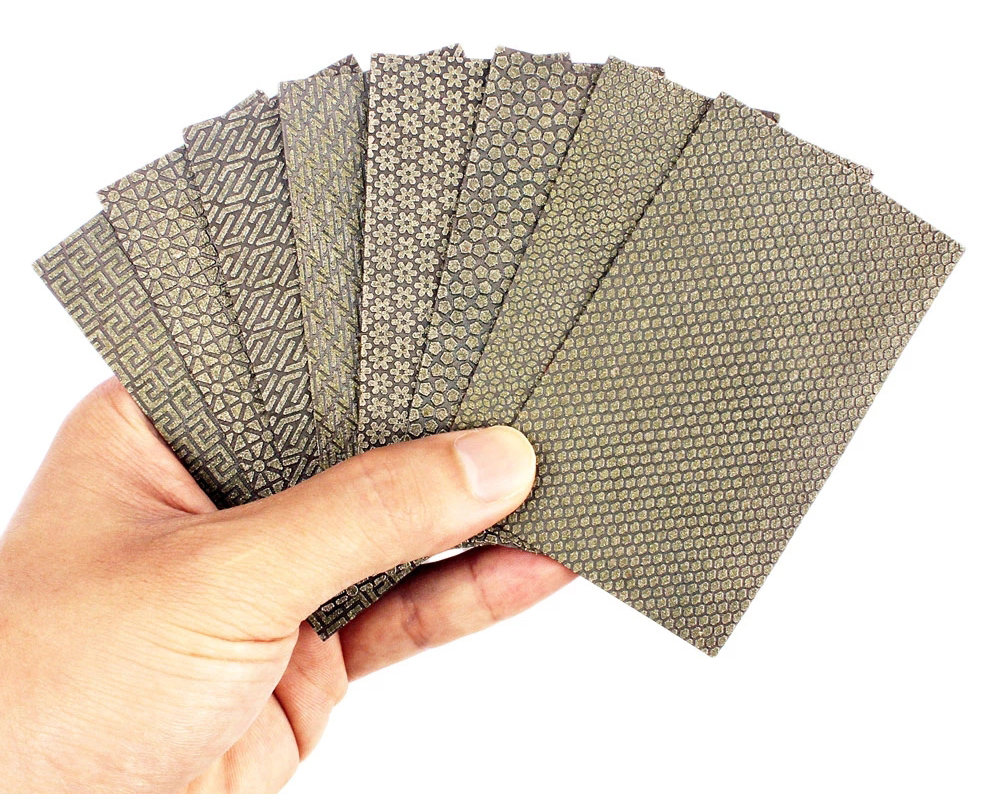
Diamond Sandpaper (The Ultimate Upgrade)
When standard materials fail, you need diamond sandpaper. Diamond is the hardest material on earth. Consequently, it produces extremely durable sandpaper that outlives ordinary sheets by dozens of times. It cuts faster. Additionally, you can wash and reuse it repeatedly.
Applications: Match Sandpaper to Your Material
Proper sandpaper applications prevents surface damage. You must match the type of abrasive to the material you’re working on.
Best Sandpaper for Wood & Furniture
The best sandpaper for sanding wood is aluminum oxide. It works perfectly on both softwood and hardwood. Always remember to sand with the grain. This prevents visible scratches.
Best Sandpaper for Metal & Auto Body
For metalworking, use ceramic or silicon carbide. Ceramic is effective for removing heavy rust. Meanwhile, silicon carbide is an excellent choice for auto body and is ideal for wet-sanding clear coat.
Sanding Hard Materials: Glass, Stone, and Ceramics
Sanding hard materials will instantly destroy standard abrasives. You cannot use aluminum oxide on granite. It will shed grit with just a single stroke.
Instead, you definitely need diamond sandpaper. Whether you’re polishing a granite countertop, repairing scratches on glass, or sanding tile edges, diamond is essential. Diamond sanding sheets cut through hard surfaces effortlessly without losing their grit.
Practical Checklist: Common Mistakes and Troubleshooting Solutions
Mistake: The sandpaper clogs with dust immediately.
Solution: Switch to open-coat sandpaper, or use wet sanding techniques.
Mistake: Deep scratches remain on the surface after polishing.
Solution: You skipped grit sizes. Never jump directly from 80-grit to 220-grit.
Problem: The abrasive becomes ineffective after just two minutes of use on the stone.
Solution: Stop using silicon carbide. Switch to diamond sandpaper immediately.
Expert Advice: When to Upgrade to Diamond Abrasives?
Many professionals wonder where to buy diamond sandpaper and whether it’s worth the investment. If you work with stone, glass, or hard composite materials on a daily basis, standard sandpaper is a waste of money.
The best sandpaper for professional use is typically diamond abrasive. It reduces downtime. It delivers exceptional surface finishing results. Most importantly, it significantly lowers your long-term tool replacement costs.
Do you need to source the right abrasives for your upcoming commercial project? Don’t guess. Consult our experts today for an accurate quote and review the specifications of our premium diamond abrasives.
Conclusion
The successful completion of a project always begins with proper sandpaper selection. First, you must use a sandpaper selection chart to find the correct grit. Next, you must select the appropriate abrasive material for the specific surface.
For standard woodworking and metalworking, traditional abrasives are perfectly sufficient. However, if you face challenging hard materials, diamond sandpaper is your most reliable solution.
Are you ready to optimize your surface finishing process? Review our product specifications and contact our team to find the most professional abrasive solutions for your business.
Frequently Asked Questions
What is the difference between wet and dry sandpaper?
Dry sandpaper is best suited for unpolished raw wood. In contrast, wet sandpaper uses water as a lubricant. The liquid washes away debris. As a result, it prevents clogging and creates a smoother surface on metal or stone.
Can I skip sandpaper grits to save time?
No. Skipping grits will leave deep scratches caused by the coarser sandpaper. You must proceed in a logical sequence (for example, start with 80, then 120, followed by 220 grit). This is the only way to ensure a flawless surface.
What are diamond sanding sheets used for?
Professionals use them to polish extremely hard surfaces. They perform exceptionally well on concrete, marble, granite, and glass. Additionally, they are ideal for sharpening carbide tools.
Post time: Jan-16-2026