
When you need to efficiently perform internal profiling, sink cutouts, or grinding on tight curves, a reliable tool is essential. Diamond grinding drum offer powerful material removal capabilities and deliver outstanding performance on extremely hard materials such as stone, glass, and composites. Selecting the correct diamond drum wheel can minimize material damage, reduce the risk of rework, and shorten downtime. Therefore, a thorough understanding of the available options is critical to for fabrication success. This guide will walk you through the various types, primary applications, and professional selection strategies to help boost your production efficiency.
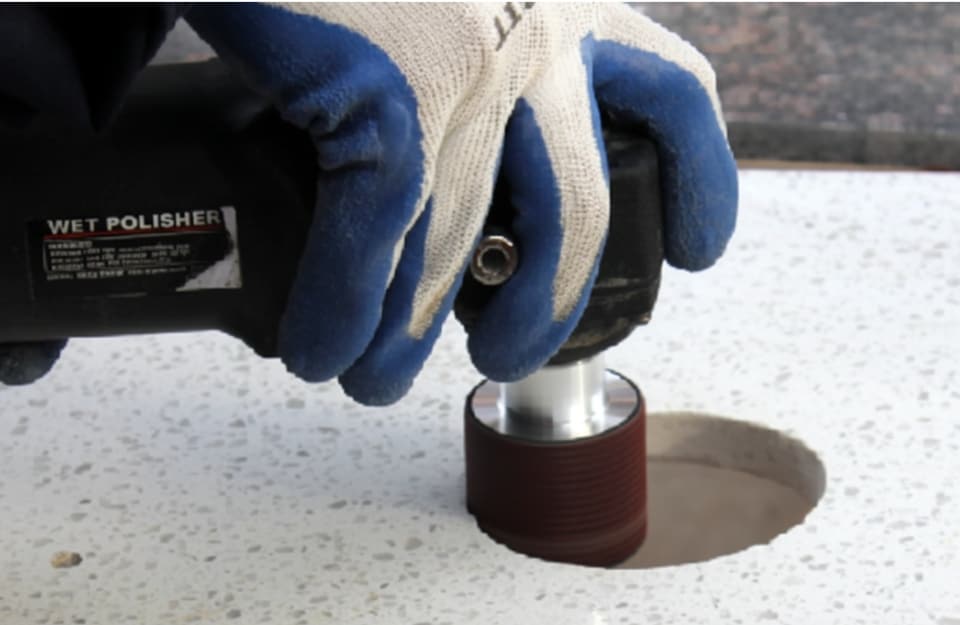
What is a Diamond Grinding Drum
In the process of industrial material, conventional flat grinding tools often don’t work on the narrow curved surfaces and internal bores. The diamond grinding drum is a cylindrical grinding consumable specifically designed to address this challenge. It is not merely a grinding tool but a key that bridges the gap between rough processing and precision shaping. To fully harness its cutting potential, it is essential to first understand its core functions, operating mechanisms, and typical application in high-demand industries.
The Core Functions of Diamond Drum
A diamond grinding drum is a highly efficient cylindrical grinding tool. It uses precisely exposed diamond particles to grind, shape, and calibrate materials. Consequently, you use it to smooth inner sink holes, enlarge drill holes, and produce more precise edge profiles. It also achieves superior surface finish within tight radii that standard diamond grinding cup wheels cannot reach.
How Does a Diamond Grinding Drum Work
This tool can be securely mounted on angle grinders, CNC machines, or handheld drill. AAs the grinding drum rotates at high speed, the hard diamond particles continuously abrade the target material. Manufacturers often design these to run with water to cool the surface and flush away debris. As a result, you achieve a clean, chip-free edge rapidly.
What are Diamond Drum Wheel Used For
These grinding tools are widely used in a variety of demanding applications.
Stone Fabrication: Shaping tight sink cutouts in granite, marble, and engineered quartz.
Glass Processing: Smoothing sharp inner edges of drilled architectural glass.
Composite Manufacturing: Rapid removal of heavy burrs on fiberglass and wind turbine blades.
Are there Different Types of Diamond Grinding Drums
Yes. Manufacturers typically classify these tools based on production processes, shapes, and application scenarios. Understanding these differences helps reduce the risk of tool failures and ruined materials.
By Manufacturing Technology
| Technology | Cutting Speed | Lifespan | Best Applications |
|---|---|---|---|
| Electroplated | Very Fast | Moderate | Composites, Glass, Rapid Shaping |
| Sintered | Slow | Very Long | Hard Stone, Heavy Stock Removal |
| Brazed | Fast | Moderate | Dry Cutting, Cast Iron, Concrete |
Electroplated Diamond Drums: These feature a single layer of diamond grit bonded firmly with nickel. As a result, they offer diamond exposure for stronger and faster cutting.
Sintered Diamond Drums: Diamond particles are pressed and sintered into a metal matrix. They are better suited for heavy-duty stone removal and offer excellent service life, but cutting speeds are significantly slower.
Brazed Diamond Drums: Diamonds are directly fused to a steel core using high heat. They perform better in dry cutting environments, but the finished surface is typically rougher.
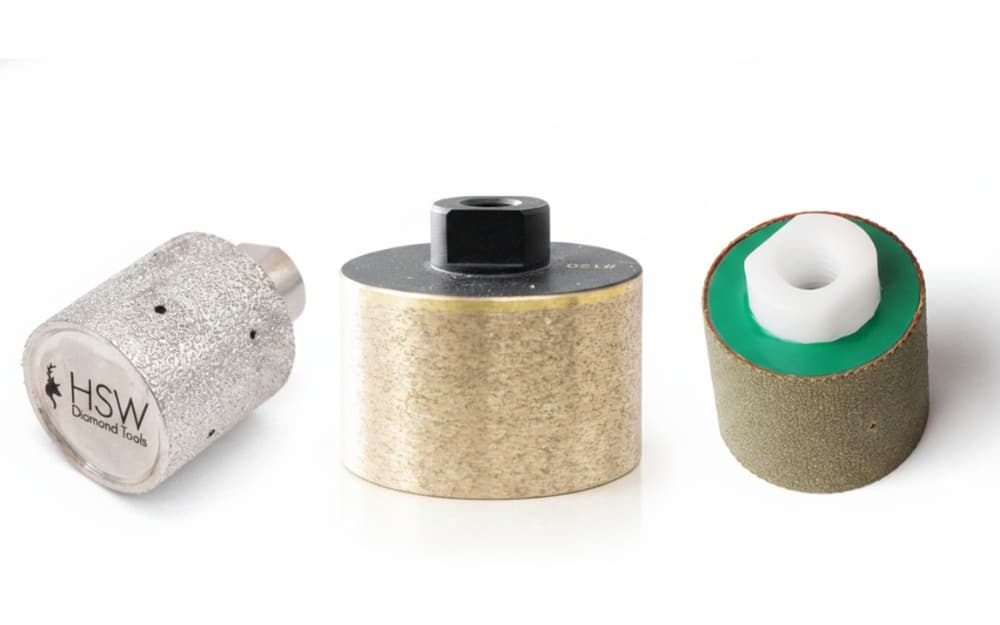
By Shape & Structure
Diamond grinding drums come in various configurations. You can choose a solid steel core for maximum rigidity during heavy-duty grinding. Alternatively, you can opt for resin-filled drums to reduce high-speed vibration and minimize the risk of chipping in fragile stone. Additionally, some advanced drums feature internal water channels designed to provide superior cooling.
By Application Scenario
Your specific project will determine the ideal grinding drum style. For example, zero-tolerance grinding drums can quickly remove excess stone to achieve a more precise fit along the template lines. Meanwhile, finer polishing drums can be used to finish freshly cut edges, achieving a high-gloss finish.
Why Electroplated Diamond Grinding Drums Perform Better
Electroplated diamond grinding drums offer significant advantages when working challenging materials.
First, advanced nickel plating processes fully expose the diamond crystals, resulting in stronger cutting force that allows for rapid penetration and material removal. Second, their single-layer structure is less prone to clogging. When grinding sticky composite materials such as carbon fiber or fiberglass, standard sintered tools often dull quickly and experience slippage. In contrast, electroplated tools allow for smoother chip and improve heat dissipation efficiency.
Select Z-LION Electroplated Diamond Drums
With over 20 years of manufacturing experience, Z-LION offers industry-leading electroplated tools. We utilize a proprietary anti-shedding nickel plating process. Thus, our diamonds stay firmly attached even under extreme high-speed loads. You’ll achieve higher cutting efficiency and significantly reduce processing time. Explore our advanced electroplated diamond drum solutions today to elevate your machining quality.
How to Choose the Right Diamond Grinding Drum
Selecting the right tool directly impacts project timelines and material safety. Follow these steps to ensure your tool precisely matches your actual machining needs.
Choose Grit Based on Your Process Stage
Coarse Grit (30/40): Suitable for heavy-duty material removal and initial rough shaping.
Medium Grit (60/80): Used to smooth jagged edges and remove deeper grinding scratches.
Fine Grit (100/120+): Used for final surface preparation before switching to a polishing pad.
Match Drum Type to Material
Hard, dense materials like granite typically require sintered grinding drums for longer tool life. Conversely, if you are processing glass, fiberglass, or complex wind turbine blades, you should choose electroplated diamond drum wheel. The electroplated bond helps control heat buildup and reduces the risk of tool clogging on resin-rich composite materials.
Select the Right Size and Connection
Before purchasing, measure the inner arc radius to ensure the grinding drum’s diameter fits smoothly into the intended cutout. Next, verify the spindle interface of your equipment. Common options include 5/8″-11 threads for angle grinders, M14 threads, and 1/2″ Gas fittings for large CNC machines. Mismatched threads can damage the spindle.
Finding the Right Diamond Drum for Your Next Project
A high-quality diamond grinding drum can boost daily processing efficiency. By precisely matching the manufacturing process, grit size, and dimensions to your material, you can reduce rework and extend tool life. If you need to process challenging composite materials or perform stone drilling, standard grinding tools often result in wasted time. You need a more reliable tool with superior cutting performance. That’s why we invite you to contact our sales team today. Get a custom quote, or let our technical experts help you select the right electroplated diamond tools for your project.
FAQs
What is the difference between a diamond grinding drum and a diamond cup wheel?
A diamond grinding drum features a cylindrical shape designed to grind inside holes, tight curves, and sink cutouts. Conversely, a diamond cup wheel features a wide, flat face designed exclusively to grind flat surfaces and floors. You cannot use a cup wheel for tight inner radii.
Can diamond grinding drums be used on composites?
Yes, but we recommend using electroplated diamond grinding drums. Electroplated tools have a higher degree of diamond grain exposure and superior chip removal capabilities,. They can reduce the risk of resin from fiberglass or carbon fiber softening due to heat and quickly clog the abrasive surface.
Should I use diamond grinding drums wet or dry?
Whenever possible, wet use is recommended. Water cools the diamond grinding drum and removes grinding slurry and debris, thereby reducing the likelihood of material damage due to overheating.
Why is my diamond grinding drum clogging?
Clogging is more likely to occur when using sintered or fine-grit diamond drums on soft and sticky materials such as resin, plastic, or soft composites. To resolve this quickly, switch to a coarse-grit electroplated diamond drum to improve chip removal and ensure adequate water flow.
How long does a diamond grinding drum last?
Lifespan depends heavily on the tool’s bond type and your material’s hardness. Sintered drums last the longest on hard stone due to their continuous diamond exposure. Electroplated drums wear faster but offer significantly faster cutting speeds on glass and composites.
Can diamond grinding drums be customized?
Yes. Direct manufacturers like Z-LION typically offer comprehensive OEM customization services. You can specify the diameter, overall length, grit size, and threaded connection to better match the requirements of your CNC equipment or specific materials.
Post time: Apr-30-2026