
Indistinct scratches on glass, regardless of whether they are in industrial glassware, architectural panels or custom tabletops can be frustrating. These defects can undermine both appearance and function. The main question you have is how to get rid of glass scratches effectively without causing further damage. Although there are many DIY options, they usually only address the simplest scuffs. To get a consistent, professional result, you need to use a reliable tool.
This guide provides a complete solution on how to repair scratched glass using the most reliable method: precision grinding by diamond abrasives. We will discuss the principles, step-by-step process, and the specific tools you need to restore glass surfaces. Z-LION is a professional manufacturer of high-performance flexible diamond abrasives for 20 years. It can provide solutions to make your job more efficient with better results.
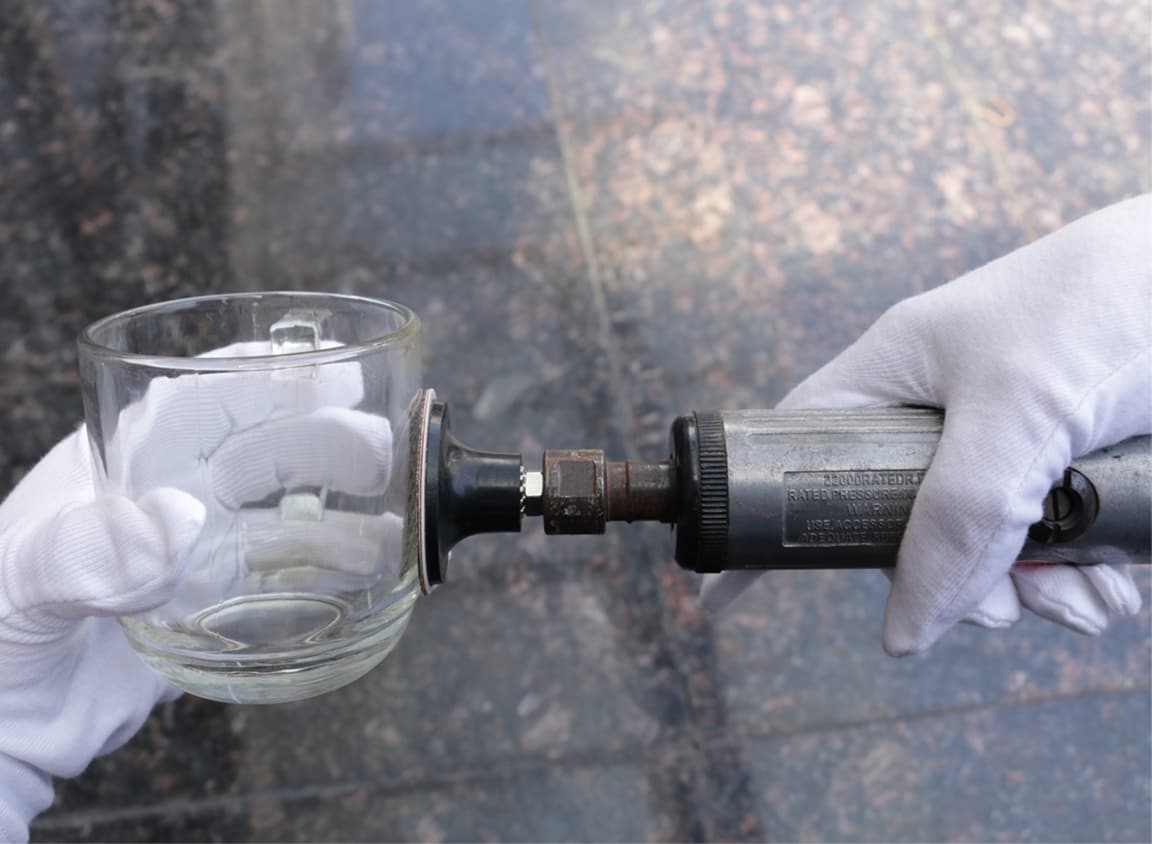
Can Glass Scratches Be Removed from Glassware?
Mostly, you can remove scratches from almost any type of glassware. However, your success depends on understanding the nature of the scratch and using the right removal technique.
Scratches on glassware often come from abrasive contact during handling, cleaning, or industrial processing. The critical factor is the scratch depth.
Light/Superficial Scratches: These are barely deep enough to catch a fingernail. They mainly impact uppermost layer and frequently can be polished out with minimal material removal.
Deep Scratches: These are noticeable. To remove them, you must precisely grind the surrounding glass down to the level of the scratch bottom. This requires a controlled abrasive process.
Attempting to polish a deep scratch directly is ineffective. You need a tool capable of controlled material removal. This is where electroplated diamond sanding discs become essential. They allow you to do this with precision and grind away defect before final polish.
Best Method to Remove Glass Scratches – Diamond Sanding Disc Solution
To get rid of glass scratches in a reliable and effective way, the ultimate method is to operate with electroplated diamond abrasives using a multi-stage process. This approach gives you the control to remove material evenly, restoring the glass to a flawless finish.
How Does Electroplated Diamond Abrasive Work?
Electroplated diamond tools work through a process of single-layer nickel plating. Industrial diamond grits are bonded to a metal substrate, leaving the sharp diamond crystals highly exposed. That is to say, this aggressive design allows for high grinding efficiency and accuracy with fast and clean cuts using minimal pressure.
Step-by-Step Guide to Remove Glass Scratches
Follow these steps to effectively remove glass scratches. Always wear appropriate personal protective equipment (PPE), including safety glasses and gloves.
Step 1: Choose the Right Grit
Select a coarse enough diamond sanding disc so it can grind out the scratch without making big scratches. A 200 to 400 grit disc usually works well.
Step 2: Start Low-Pressure Grinding
Attach the disc to a die grinder or rotary tool. Apply a small amount of water to the glass surface to act as a lubricant and coolant. Using light pressure and continuous motion, work on the scratched area and its immediate surroundings to blend the repair evenly.
Step 3: Progress to Finer Grit
Once the original scratch is gone, you will have a uniform, hazy finish. Now, you have to improve this surface. Switch to the next finer grit (e.g., from 400 to 800 grit). Repeat the grinding process, ensuring you remove all marks from the previous, coarser step.
Step 4: Final Polishing
Continue progressing through finer grits until you reach 1800 or 3000 grit. The final step is to use a felt polishing pad with a cerium oxide slurry. This will remove the finest microscopic scratches and restore the glass to its original clarity.
Why Use Z-LION R-Type Diamond Quick Change Discs for Glassware?
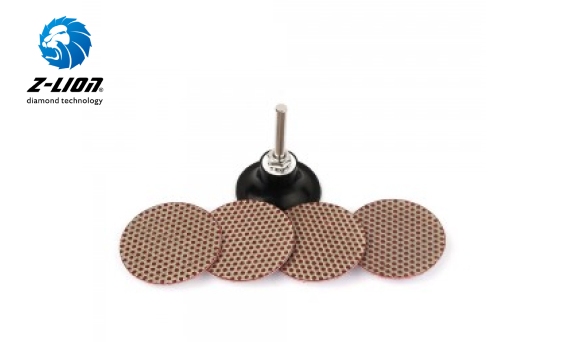
When you need to get scratches out of glass efficiently, tool selection is critical. The Z-LION R-Type Diamond Quick Change Discs are engineered for this type of detailed work. The R-type roll-lock backing allows for instant, tool-free grit changes, dramatically speeding up the multi-stage grinding process and saving you valuable time.
Important Tips When Using Diamond Sanding Discs on Glass Scratches
To ensure you successfully get rid of glass scratches without causing new problems, follow these professional best practices. Correct technique is just as important as the right tool.
Always Use a Lubricant: Grinding glass dry generates heat, which can cause thermal shock and crack the glass. Always use water or a suitable coolant.
Keep the Tool Moving: Never hold the grinder stationary. Use overlapping motions to blend the repair area smoothly and prevent creating a low spot.
Start with the Finest Possible Grit: If unsure, test a fine grit (like 800) first. If it’s not effective, then move to a coarser grit to minimize material removal.
Clean the Surface Between Grits: Thoroughly wipe the glass clean after each step. Leftover abrasive particles can create deep scratches in the next stage.
Feather the Edges: When working on a scratch, grind a larger area around it. This “feathering” technique creates a gradual transition and prevents visible distortion.
Gain a Flawless Finish on Your Glassware
Ultimately, the best way to get rid of glass scratches is to use a systematic approach with tools designed for the job. Diamond sanding discs provide the cutting power and control necessary to remove defects, while a progressive grit sequence ensures you can restore the surface to perfect clarity.
If you are ready to implement a professional solution for glass scratch removal, our experts are here to help. We can recommend the right grits and tools for your specific application. Contact us for a technical consultation or to request a quote on our products.
Frequently Asked Questions
What grit diamond sanding disc is best for glass scratch removal?
For most noticeable scratches, start with a 200 or 400 grit disc. For very fine surface scuffs, you may be able to start with an 800 grit. You will then need to progress through finer grits (e.g., 800, 1800, 3000) to prepare the surface for final polishing with cerium oxide.
Can all types of glass be polished with diamond sanding discs?
Most common types of glass, including soda-lime and tempered glass, can be repaired. However, do not use this technique on coated glass (e.g., Low-E or mirrored surfaces) as it will remove the coating. Exercise extreme caution with tempered glass, as removing too much material can compromise its integrity.
Can I fix scratched glass at home?
Yes, it is possible to fix scratched glass at home for minor projects, provided you have the right tools (a rotary tool, diamond discs, polishing compound) and follow safety procedures. For high-value glass, a professional service is recommended.
Is it possible to remove deep glass scratches with diamond sanding discs?
Yes, diamond sanding discs are one of the few effective methods to remove deep scratches from glass. It requires starting with a coarser grit (e.g., 120 or 200) to grind the glass down to the bottom of the scratch, followed by a full sequence of finer grits to restore the surface.
Post time: Apr-24-2026