
When working in tableware manufacturing or restoration, mastering how to polish ceramic mugs is crucial. You need an efficient method to remove surface imperfections and achieve a high gloss finish. A smooth surface not only enhances the appearance but also improves practicality. Therefore, understanding best practices for polishing ceramic tableware affects your business profitability. In this guide, we will explore the tools, tips, and key steps needed to achieve consistent results.
Why Polishing Ceramic Mugs is So Important
Restore Shine and Aesthetic Appeal
In the tableware industry, first impressions are crucial. Proper polishing restore the ceramic mugs’ original gloss. A bright surface not only attracts buyers more effectively but also reflects high-end manufacturing quality. Conversely, a dull or uneven surface can make an otherwise well-made mug appear cheap and poorly crafted.
Remove Minor Scratches and Stains
The manufacturing process and daily commercial use often leave minor imperfections. Fortunately, polishing can remove shallow scratches and stubborn stains. As a result, products that might otherwise fail quality inspections can still be salvaged.
Maintain Durability of Glazed Surfaces
Polishing does more than improve appearance. It smooths rough spots and reduces the areas where dirt, bacteria, and coffee oils accumulate. As a result, a polished glaze remains more durable and easier to clean over time.
Tools and Materials You Need for Ceramic Mugs Polish
To polish ceramic mugs efficiently, selecting the right abrasive is essential. The choice should depend on production volume and the desired finish.
Comparison of Household vs. Professional Tools
For small-scale DIY repairs at home, consumer-grade polishing agents are often sufficient. In contrast, commercial manufacturing and restoration require industrial-grade solutions.
| Tool Category | Common Materials | Best Application | Efficiency and Durability |
|---|---|---|---|
| Household / DIY | Toothpaste, baking soda, microfiber cloth | Daily light cleaning | Very low |
| Professional-grade | Ceramic diamond polishing pads | Removing glaze defects, polishing the base | Extremely high |
Why Roloc Back Mini Diamond Sanding Discs are Ideal
When processing mugs in bulk, traditional sandpaper and standard abrasives wear out quickly. This makes it difficult to balance efficiency and consistency. In contrast, professional manufacturers often use Roloc back mini diamond sanding discs. These tools use electroplated diamond technology to provide strong cutting performance and long service life.
Additionally, they feature a quick-change twist-lock system that reduces downtime during abrasive changes. Plus, these mini angle grinder pads are ideal for smoothing rough bottoms and polishing narrow or curved surfaces. Ultimately, they provide a safer and more efficient solution for ceramic tableware and sanitary ware.
How to Polish a Ceramic Mug Step by Step
Following this process ensures successful polishing without damaging the delicate glaze.
Clean and Prepare the Mug
First, thoroughly clean the surface to remove dust, and manufacturing oils. After washing with warm soapy water, dry the mug completely. A clean surface prevents leftover particles from causing deeper scratches during polishing.
Select the appropriate abrasive or diamond disc
Next, select the appropriate grit size based on your goal. If you need to level a rough and unglazed rim, start with a coarse grit electroplated diamond pad. For minor surface imperfections, choose a fine grit polishing pad. Using Roloc back pads allows you to switch between different grits quickly.
Polishing Tips: Light Pressure and Consistent Motion
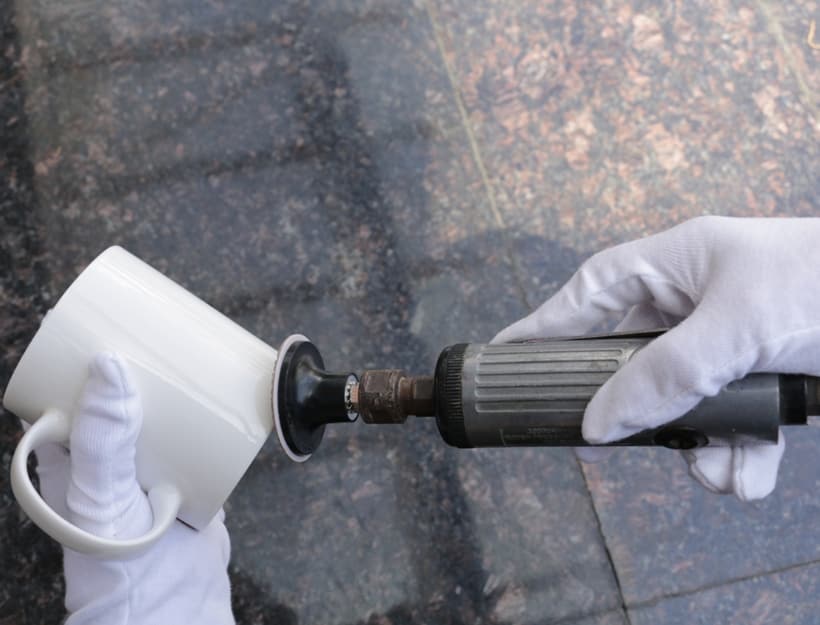
Attach the selected grinding pad to the mini angle grinder and set the speed to low or medium. Apply gentle, even pressure while moving in overlapping circular motions. Never let the power tool remain stationary at a single point, as this will overheat and damage the glaze.
Final Finishing: Buffing to Shine
Finally, wipe away ceramic dust with a clean, slightly damp microfiber cloth and check that the surface is even and smooth. To maximize gloss, use a soft polishing wheel for a final pass. This step ensures the ceramic mug looks its best and is ready for shipment.
Practical Tips for Maintaining Polished Ceramic Mugs
Successfully completing the polishing process and achieving the desired finish is only the beginning. To protect the polished surface during storage, transport, and commercial use, standardized handling and maintenance are essential.
Avoiding Scratches and Chips During Use
Proper handling and storage can minimize accidental damage. We recommend using cushioned cardboard dividers to separate and stack the ceramic mugs. Additionally, avoid letting rough, unglazed bottoms rub directly against the polished glazed surface.
Regular Cleaning to Preserve Shine
Proper daily maintenance keeps the polished surface looking new. We recommend using a non-abrasive liquid detergent with a soft sponge for cleaning. Prolonged use of rough metal scouring pads will quickly wear down the polished surface.
When to Repolish or Spot Repair
Over time, frequent commercial dishwasher use may gradually reduce surface luster. If noticeable wear appears that cannot be improved by routine cleaning, consider spot repair. In such cases, gently buffing the area with a fine grit ceramic diamond polishing pad will restore the original shine.
Final Words
Mastering effective polishing techniques for ceramic mugs can improve product quality. By reducing inefficient manual processes and upgrading to professional-grade abrasives, you can increase production efficiency. Tools with electroplated diamond technology provide the stability and cutting force required for high volume ceramic processing.
If you want to streamline production and ensure the reliable finish every time, choosing the right tools is crucial. Request a quote for our diamond tool solutions today, and let our technical experts help optimize your polishing process.
Frequently Asked Questions
Can all ceramic mugs be polished?
Yes, most ceramic mugs can be polished. However, the approach depends on whether the surface is glazed or unglazed. When working with delicate glazed surfaces, finer abrasives should be used to avoid damaging the top layer.
Can polishing remove scratches and stains?
Yes. Polishing can removes superficial scratches and stubborn embedded stains. However, deeper chips or cracks require professional ceramic repair fillers.
How often should ceramic mugs be polished?
Polishing is recommended only when there is visible wear, or stubborn stains that regular cleaning cannot remove. Excessive polishing will gradually wear down the protective glaze.
Should I use wet or dry polishing for ceramic mugs?
For ceramic materials, we generally recommend wet polishing. Water helps prevent overheating and glaze burn while reducing airborne silica dust. Therefore, wet polishing is both safer and cleaner.
Can I polish ceramic coffee mugs?
Yes. Ceramic coffee mugs can be polished using the same methods as other industrial tableware. The key is to smooth rough rim and restore the exterior shine with a fine grit polishing pad.
Post time: May-15-2026