
Mastering how to polish granite edges is a core skill for any fabricator and contractor seeking a professional finish. When installing natural stone, raw cut edges often appear dull and rough. Therefore, you must carefully finish these surfaces to match the polished finish of the slabs. Using high-quality professional diamond tools ensures a smooth, glossy result. This guide will provide you with a step-by-step method to how to polish granite edges safely. As a result, you’ll not only save processing time but also improve efficiency on the job site.
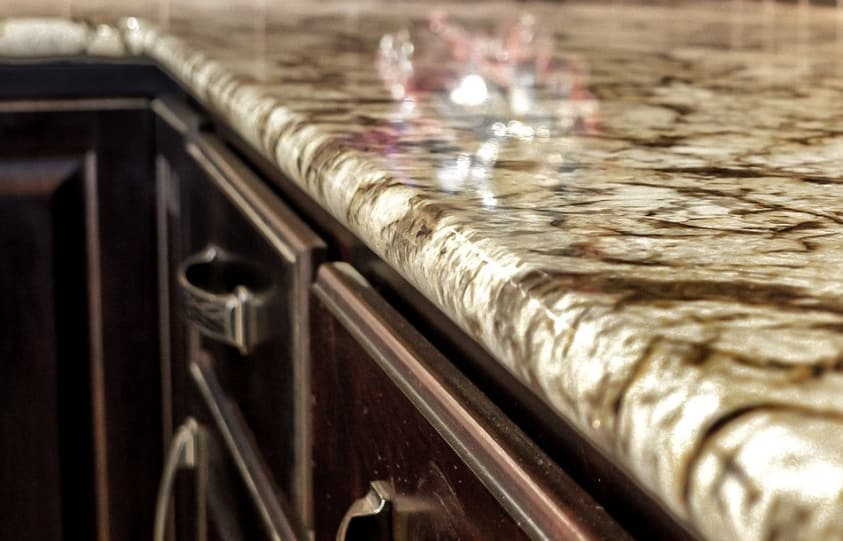
Why Mastering Granite Edge Polishing is Essential
Untreated stone edges compromise both the aesthetic appeal and durability of an installation. For example, rough edges are susceptible to chipping under daily impacts. Furthermore, moisture can seep into unpolished surfaces, causing the stain. Therefore, knowing how to polish granite edges helps you prevent common countertop damage. Consequently, you’ll achieve a durable and stain-resistant stone edge. What’s more, contractors who master granite edge polishing can earn higher project returns.
Essential Tools for Polishing Granite Edges
To master how to grind granite edges, you must select the correct abrasives. Using the wrong tools can quickly ruin expensive stone slabs.
Essential Power Tools
You’ll need a variable-speed wet polisher to control heat during the grinding process. A wet polisher effectively prevents harmful dust and protects the stone from thermal shock. Therefore, when learning granite edges grinding process, be sure to check the tool compatibility. Keep a speed between 2,000 and 4,000 RPM to avoid burning the stone matrix.
Diamond Polishing Tools
High-quality diamond polishing pads for granite edges are key to achieving a mirror finish. You should first use electroplated diamond wheels for heavy stock removal. Next, switch to resin bond diamond polishing pads for the final fine polishing. If you are smoothing granite edges by hand, use a flexible hand pad with a comfortable handle. These professional granite edge polishing tools cut quickly and resist heat buildup.
Supporting Materials
Before you begin, have water supply hoses, safety glasses, and heavy-duty aprons ready. You can use painter’s tape to protect your work surface from accidental scratches. Finally, keep a rubber squeegee nearby to wipe away slurry and check your progress.
| Steps | Grit Level | Tool Type | Purpose | Expected Finish |
|---|---|---|---|---|
| Shaping | 50–100 | Electroplated diamond grinding disc | Remove cut marks & shape | Flat, uniform profile |
| Smoothing | 200–400 | Resin / Electroplated pads | Removes deep scratches | Smooth matte finish |
| Pre-Polishing | 800–1,500 | Resin bond polishing pads | Build light reflection | Satin / low gloss |
| Final Polishing | 3,000+ | Buff pad / felt pad | Achieve mirror shine | High-gloss reflection |
Step-by-Step Guide to Polishing Granite Edges
The granite edge polishing process requires patience and systematic approach. Please follow these clear steps to achieve a smooth granite edge finish.
Step 1: Edge Grinding and Shaping
First, perform basic grinding after cutting the stone. Use a coarse 50 grit diamond wheel to shape the edges. For beveled edges, hold the polishing machine at a steady 45-degree angle. Conversely, glide it smoothly for rounded shapes. Keep the tool moving constantly to avoid creating flat spots.
Step 2: Progressive Polishing
Next, begin progressive polishing. Switch to a 100 grit polishing pad, followed by a 200 grit pad. At this stage, make sure to require steady hands and even pressure. Before changing the polishing pad, use a scraper to clean the edge and remove coarse debris. These steps are crucial for smoothing granite edges, as each subsequent grit removes the scratches left by the previous one.
Step 3: Refining the Surface
Transition to the fine stage using 400, 800, and 1500 grit resin polishing pads. As you continue through the steps for polishing granite edges, watch the surface sheen develop. At this point, reduce the water flow during higher grits to allow the heat to seal the resin. Always maintain gentle, even pressure to allow the diamond abrasive to work effectively.
Step 4: Final Polishing
Finally, use a 3,000 grit pad on the edges. If you want to achieve a mirror finish, you can use buffing pad with polishing compound. Rim the polisher at a lower speed of 2,000 RPM. This step brings out the natural color and depth of the granite.
How to Polish Granite Edges to Achieve Different Finishes
Different construction projects require different edge designs. You can customize the appearance by adjusting the tool path and grit selection.
High gloss polished edges: This classic finish requires a complete grit sequence up to 3,000 grit. It is ideal for modern granite countertop edges.
Matte/Honed edge finish: Stop polishing at 400 grit. This creates a smooth, non-reflective surface that effectively hides water spots.
Rounded bullnose edge: To learn how to round the granite edges, start by using a profiling wheel first. Then, use a flexible pad to evenly polish the curve.
Bevel edge polishing: Guide your grinding tool at a consistent angle to create a sharp chamfered look.
Hand Polishing Granite Edges: When polishing granite edges at home, a clean work area is essential. For those looking to polish granite edges by hand, our flexible diamond sandpaper or hand pads are ideal.
Expert Advice on How to Polish Granite Edges Faster
To speed up the granite edges polishing, maintain a steady machine operation. Be sure to clean the stone between pad changes. Keep a clean microfiber cloth nearby. Additionally, use your body weight rather than your arms. This helps ensure continuous, consistent pressure and reduces fatigue during long work. Finally, during the initial shaping phase, choose high-performance electroplated diamond tools. Electroplated diamonds remain exposed and sharp, removing material twice as fast as standard sintered ones.
Final Words
Achieving perfect results when grinding granite edges requires not only skill but also high-quality abrasives. O
At Z-LION Diamond Tools, we manufacture industry-leading electroplated and flexible diamond hand polishing pads and polishing discs designed for ultimate efficiency. With our specialized product range, mastering the art of polishing granite edges becomes effortless and efficient. Whether you’re looking to enhance your workshop’s capabilities or require custom OEM specifications, our technical team is always ready to support you. Feel free to contact us today to request a product catalog or a custom quote for your bulk industrial needs.
FAQs
Can granite edges be polished after cutting?
Yes. Once cutting is complete, start by using a coarse grit diamond grinding wheel to remove saw marks. Next, polish the edges in a progressive sequence from 50 to 3,000 grit to restore the factory shine.
How to round a granite edge?
To round the edges of granite, you can use a specialized profile wheel. Carefully shape the sharp right angles into smooth curves. Once the desired curve is achieved, use a flexible diamond polishing pad to gradually refine the edges.
Can I polish granite edges by hand?
Yes, you certainly do this by hand using a hand polishing pad. Although manual polishing takes longer than using power tools, it’s ideal for fine angle adjustments and small touch-ups.
What tool is best for granite edge polishing?
It is best to use a variable-speed wet polisher equipped with high-quality diamond polishing pads designed for granite edges. Wet grinding keeps the work area cool and suppresses dust, ensuring the stone achieves a high-gloss, flawless finish.
Post time: Jun-18-2026