
If you need to cut, trim, or shape carbon fiber, you know this is no simple task. Carbon fiber is strong and lightweight, but improper methods can easily cause chipping, delamination, burrs, sharp fractures, and irritating dust. Therefore, tool selection, workpiece support, and post processing are just as important as the cutting itself.
At Z-LION Diamond Tools, we specialize in providing high-efficiency grinding for difficult composite materials like carbon fiber. If you’re evaluating abrasive tools for trimming and shaping, start by exploring Z-LION electroplated diamond tools.
Why Carbon Fiber Needs a Different Cutting and Shaping Method
Carbon fiber differs from wood, steel, or plastic. While the fibers are extremely tough, the resin matrix can shatter under impact. Consequently, a cut with a coarse-tooth cutting often results in rough edges, exposed fibers, and edge fractures.
When machining carbon fiber, you need to manage 3 risks: delamination, edge chipping and fiber pull-out, and fine composite dust generated during cutting and grinding. Therefore, fine-tooth blades and abrasive cutting tools are recommended. In many workshops, abrasive tools provide more consistent edge control because they grind through the laminate rather than tearing the resin and fibers.
Safety First When You Cut Carbon Fiber
Before cutting carbon fiber, personal protective equipment is essential. This is not optional. Carbon fiber dust can irritate the skin, eyes, and respiratory tract, and trimmed edges can be as sharp as a blade.
We recommend that you equip yourself with the following protective gear:
Respiratory protection suitable for fine dust
Safety goggles or sealed face shields
Cut-resistant gloves
Long-sleeved work clothes or coveralls
Local exhaust ventilation or dust collection system
If extensive trimming, chamfering, or sanding of carbon fiber is required, prioritize full-body dust protection and effective ventilation. Additionally, clean the work area promptly to prevent dust from becoming airborne again.
Best Tools to Cut Carbon Fiber: Quick Comparison Table
The tool depends on cut length, contour complexity, and edge quality requirements. The table below can help you quickly determine which method is best suited for your carbon fiber workpiece.
| Tool | Application | Advantages | Limitations |
|---|---|---|---|
| Angle grinders with cutting discs | Straight cuts, large-area material removal | Fast, suitable for larger parts | Requires a steady hand; generates significant dust |
| Curve saws with carbide/abrasive blades | Curved and irregular contour trimming | Suitable for complex shapes | Incorrect blade can cause chipping |
| Electric grinder/Dremel | Detail finishing, grooving, and small cuts | High precision, suitable for spot work | Lower efficiency when processing thick panels |
| Hacksaw with carbide-tipped blade | Small batches, manual finishing | Simple, low-cost | Slow, high labor intensity |
| Abrasive blocks or discs | Final trimming and sizing | Good control, suitable for fine finishing | Not suitable for heavy material removal |
The core principle is simple: avoid using coarse-toothed cutting methods whenever possible, and prioritize tools that offer finer cutting or grinding tools.
How to Cut Carbon Fiber Cleanly: Step-by-Step
If you want cleaner cuts in carbon fiber, follow the steps.
Mark the cut line clearly
Use a fine-tip marker, or apply masking tape before marking. For carbon fiber surfaces with high aesthetic requirements, the tape can also help reduce surface chipping.
Support the workpiece fully
Place the carbon fiber workpiece flat on a stable surface. High-density foam board is a good choice because it supports the laminate and makes it easier to achieve a uniform cut.
Choose the right cutting tool
For straight cuts on large sheets, use an angle grinder with a cutting disc. For curved trimming, use a jigsaw with a carbide or abrasive blade. For detailed shaping, use a rotary tool.
Cut slightly outside the final line
When making the first cut, do not cut the carbon fiber directly to the final dimensions. Leave an appropriate material for trimming, and then sand it to the precise dimensions later; this usually improves edge quality.
Keep the tool steady
Apply even pressure and avoid forcing the tool. Excessive force may overheat the resin or pull the fibers. Let the abrasive do the cutting.
Finish the edge
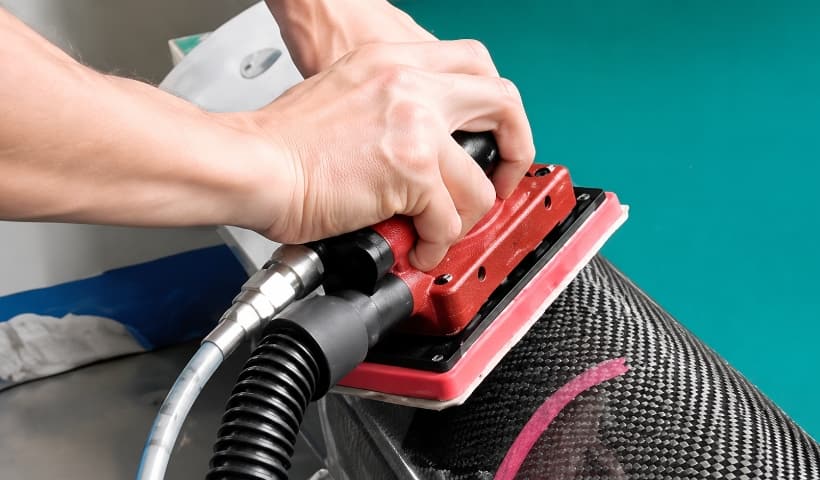
After the main cut is complete, use an abrasive disc or sanding block to finish the edges. For composite edge-finishing applications, you may also consider diamond sandpaper designed for composite processing to achieve more efficient edge shaping and more consistent cutting performance.
How to Trim and Shape Carbon Fiber Without Fraying
After rough cutting, trimming and shaping determine the quality of the finished product. Many people spend a lot of time on this step, and it is also the stage most likely to affect the consistency of the carbon fiber edges.
To achieve better finishing results:
Use coarser abrasives for initial shaping
Switch to finer grit for final edge finishing
Use sanding blocks or sanding sheets with backing for straighter edges
When working on curves, gradually refine the contour to avoid removing too much material at once
Electroplated diamond abrasives offer particular advantages when shaping carbon fiber. Their high-protrusion diamond grains cut more sharply and are less prone to clogging than traditional abrasives. As a result, you can achieve faster material removal and more consistent edge control.
How to Finish and Polish Carbon Fiber Edges
After shaping the carbon fiber, the edge finish depends on the application. For structural or hidden areas, a uniform edge without obvious burrs is usually sufficient. For visible parts, a more refined finish is often required.
A practical finishing sequence is:
First, use a medium-grit abrasive to remove excess material
Then use a sanding block to correct edge straightness or contour consistency
Next, switch to a finer grit for surface finishing
Finally, check for loose fibers or small chips
Many newly demolded carbon fiber parts do not require full polishing. Only the trimmed edges need finishing.
Final Words
When cutting, trimming, and shaping carbon fiber, the best results usually come from 3 key factors: controlled grinding, stable workpiece support, and proper edge finishing. If you only remember one rule, let it be this: cut with a slight allowance first, then trim the edges to the final dimensions.
If you’re looking for specialized abrasive solutions for composite trimming, Z-LION can help you evaluate the most suitable tool options. You can explore our diamond sandpaper or contact our team via our website to discuss your carbon fiber machining processes, edge quality goals, and OEM customization needs.
FAQs
What is the best tool for cutting carbon fiber?
It depends on your cutting needs. For straight cuts, an angle grinder with an abrasive disc works well. For curved profiles, a jigsaw with carbide or abrasive blades is more commonly used. For detailed work, use a rotary tool.
Can carbon fiber be sanded by hand?
Yes. You can sand carbon fiber for final edge finishing, edge cleaning, and minor adjustments. Hand sanding offers greater control and is suitable for decorative edges and small parts.
How can chipping be prevented when cutting carbon fiber?
To minimize chipping, fully support the workpiece, use fine or abrasive tools, maintain a steady feed rate, and leave a small finishing allowance. Then sand the edge to final size.
Is carbon fiber dust hazardous?
Carbon fiber dust can irritate the lungs, eyes, and skin. Therefore, you should always wear appropriate respiratory protection, safety goggles, and gloves, and dust extraction when possible.
Which abrasives are best suited for shaping carbon fiber edges?
For shaping carbon fiber edge, abrasives with strong cutting ability and anti clogging performance are generally more efficient. In many composite applications, electroplated diamond abrasives provide better cutting performance, heat dissipation, and edge control.
Post time: May-22-2026