
Are you wondering how to use a diamond flap disc correctly for your next project? Incorrect grinding techniques can easily lead to uneven surfaces, edge damage, overheating, and premature tool wear. Therefore, mastering the correct methods is crucial for any stone fabricator or tile installer.
In this guide, you’ll learn professional techniques that can improve your daily workflow. Specifically, we will cover diamond flap disc selection, grinder setup, and step-by-step instructions .
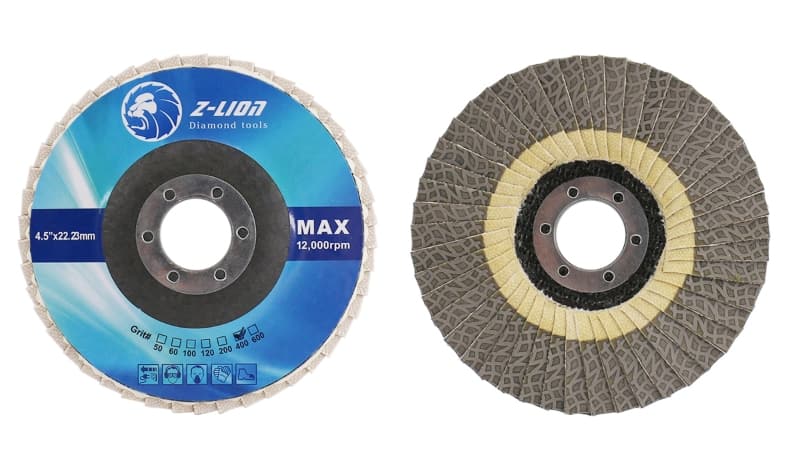
Before You Start: Prepare and Learn How to Use a Diamond Flap Disc
Every successful project begins with thorough preparation. Therefore, you must select the correct diamond flap disc before turning on the angle grinder,
Match the Disc to the Material and Grinding Task
First, you must ensure that the diamond flap disc is suited to the specific job. Electroplated diamond flap discs provide extremely aggressive cutting power for hard materials. For example, they perform exceptionally well on granite, marble, engineered stone (like Dekton), concrete, terrazzo, and tiles.
Second, identify your specific grinding task. Are you performing heavy surface grinding, edge trimming, chamfering, or fine beveling? You must confirm that your diamond flap disc suits both the material density and the specific application.
Choose the Appropriate Grit and Disc Setup
Grit selection ultimately determines the surface finish. Coarse grit removes material quickly and is ideal for initial shaping. Conversely, fine grits smooth the surface and prepare it for polishing. Additionally, you must match the diamond flap disc diameter and mounting connection to your angle grinder.
Actionable Guide: Diamond Flap Disc Grit vs. Application
| Grit Size | Best For Which Application | Expected Outcome |
|---|---|---|
| 60 Grit | Heavy material removal, rough shaping, concrete leveling | Fast cutting, visible grinding marks |
| 120 Grit | Light shaping, edge chamfering, rough edge smoothing | Moderate cutting, reduced scratches |
| 200 Grit | Surface smoothing, removing deep scratches from rough grits | Smooth finish, ready for final prep |
| 400 Grit | Fine edge finishing, pre-polishing tile and stone | Very smooth surface, minimal marks |
Check the Grinder, Disc, and Safety Equipment
Before plugging in your tool, you must ensure everything is safe. Therefore, please follow this quick checklist:
Inspect the diamond flap disc: Check the flaps for damage or abnormal wear.
Verify installation: Confirm secure mounting and compatibility with the angle grinder.
Check operating speed: Ensure the maximum rated speed of the diamond flap disc is higher than the grinder’s RPM.
Wear safety gear: Put on appropriate eye goggles, a face shield, hear protection, and a respiratory mask.
Secure the workpiece: Clamp the stone firmly to a table to prevent accidental slippage.
Step-by-Step Guide: How to Use a Diamond Flap Disc
Now that you have the right tool, you can begin grinding. Please follow the steps below strictly to achieve professional results.
Step 1: Install the Disc and Check the Setup
First, carefully follow the tool manufacturer’s installation instructions. You must ensure that the grinder guard sits in the correct protective position. Finally, double check that the diamond flap disc is securely installed before starting operation.
Step 2: Start Grinding with Controlled Pressure
Next, turn on the angle grinder. Allow the tool to reach full speed before contacting the stone. Begin your pass with gentle, even pressure. You should never force the diamond flap disc into the material. Because electroplated diamond tools have 100% diamond exposure, the abrasive automatically does the hard cutting work for you.
Step 3: Keep the Disc Moving Across the Surface
During operation, you must keep the grinder moving constantly. Use steady, overlapping passes to ensure uniform material removal. As a result, you can effectively prevent dangerous heat buildup. Avoid staying in the same spot for too long. Likewise, do not apply excessive downward pressure.
Step 4: Shape and Finish Edges Carefully
Edge processing requires extra care. When grinding stone edges, chamfering, or creating bevels, you must use highly controlled passes. Therefore, adjust your approach angle as needed based on the material condition and the desired finish. Electroplated diamond flap discs are efficient in this regard because they do not easily clog.
Step 5: Inspect the Finish and Adjust the Grit if Needed
Stop the angle grinder frequently to check your progress. You should carefully inspect for deep scratches, uneven areas, or edge damage between each grinding pass. If the application requires a smoother surface, you must immediately switch to a finer grit diamond flap disc.
Step 6: Choose the Appropriate Wet or Dry Grinding Method
You can use flexible electroplated diamond flap discs for both wet and dry grinding. However, you should only use the appropriate method if your equipment is rated to support it. For example, always follow the tool safety instructions when operating a power tool with water.
Conclusion
In summary, mastering how to use a diamond flap disc will dramatically improve your finishing quality. You must select the right grit, maintain controlled pressure, and keep the tool moving continuously. Always follow the safety instructions for your equipment. By doing so, you’ll achieve flawless edges and exceptionally smooth stone surfaces every time.
Are you ready to upgrade your stone fabrication toolkit? Z-LION flexible electroplated diamond flap discs deliver next-level cutting power, exceptional heat dissipation, and a zero clogging experience for stone, concrete, and composite materials. Our tools are designed to make your work faster and easier. Consult our experts today to get a customized quote for your next project!
Frequently Asked Questions
Can you use a diamond flap disc on granite and tile?
Yes, absolutely. You can easily cut and grind granite and porcelain tile with these tools. Because electroplated diamond flap discs are extremely sharp, they can cut very aggressively through dense materials without clogging.
Can diamond flap discs be used for both wet and dry grinding?
Yes, high-quality diamond flap discs support both methods. Wet grinding reduces harmful dust and extends the tool life. However, dry grinding offers greater convenience for quick on-site adjustments.
How do I choose the right grit for a diamond flap disc?
You should choose based on the progress of your current project. Start with 60 grit for heavy material removal. Next, switch to 120 or 200 grit for smoothing. Finally, use 400 grit for fine edge preparation.
Can diamond flap discs replace diamond cup wheels?
In many cases, yes. Compared to bulky diamond cup wheels, diamond flap discs provide a smoother finish and produce less vibration. Therefore, they are ideal for light surface shaping, edge beveling, and working with delicate materials. If you’d like to learn about the basic mechanics behind these tools, read our comprehensive guide on what is a flap disc.
Post time: May-11-2022