
When fabricating stone countertops, choosing the right edge profile is crucial. Your customers expect a flawless surface finish. Therefore, you must clearly understand the difference between a pencil edge and an eased edge. Both of these countertop edge profiles deliver a clean, modern look. However, they require different machining techniques and diamond tools.
In this guide, we’ll break down their exact differences in detail. Additionally, we’ll show you how to properly shape and polish them. If you’re looking to boost your production efficiency, explore our advanced diamond edge polishing tools.
What is the Difference Between a Pencil Edge and an Eased Edge
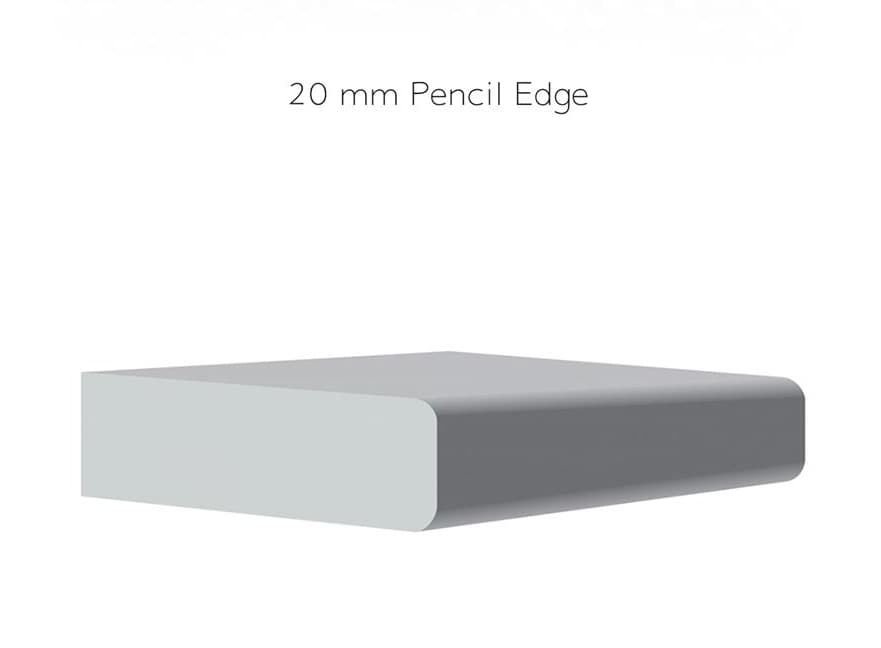
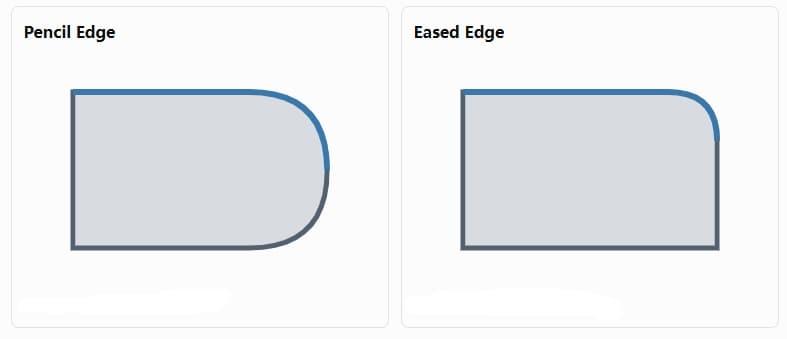
To quickly understand the difference between pencil edge and eased edge, you need to examine their corner radius. An eased edge is simply a flat edge with softened, non-sharp corners. In contrast, a pencil edge features a distinct, fully rounded profile.
Edge Profile Comparison Table
| Feature | Pencil Edge | Eased Edge |
|---|---|---|
| Shape | Rounded, with a semi cylindrical top | Flat face, slightly rounded corners |
| Radius | Typically 1/4 inch | Typically 1/8 inch or less |
| Primary tool | Diamond profile wheel | Electroplated diamond hand pad |
| Visual style | Gentle, suitable for traditional to transitional | Clean, sharp, modern |
What is a Pencil Edge
A pencil edge is a countertop profile featuring a smooth, rounded top corner. It resembles the side of a traditional wooden pencil. As a result, industry professionals often refer to it as a pencil round edge. Pencil edge countertops feature a soft, continuous curve. As a result, they effectively prevent chipping along the edges and provide a safe, comfortable surface for heavy-use areas.
What is an Eased Edge
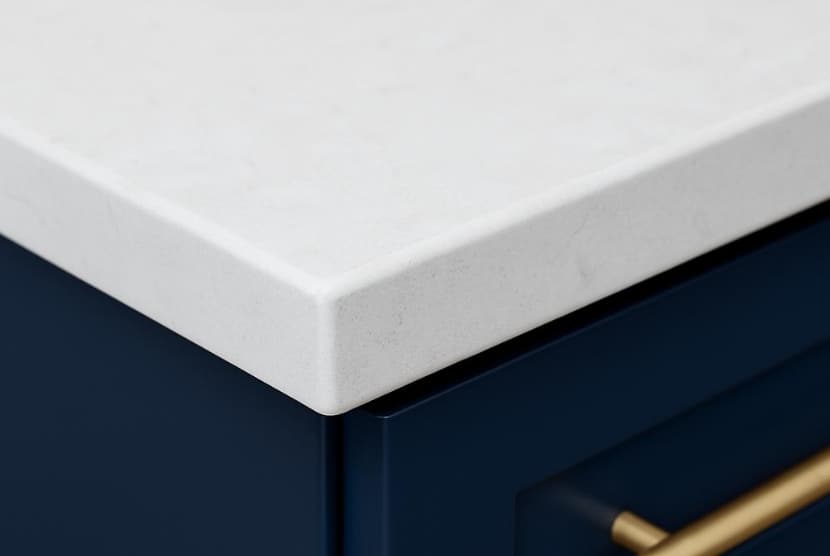
An eased edge is a straight profile with the top and bottom corners slightly rounded. It effectively eliminates the dangerous sharpness of a perfect 90-degree square cut. Countertops with eased edges appear visually substantial and robust. As a result, they remain a popular choice in modern minimalist kitchen designs.
For a deeper dive into its design benefits and applications, check out our comprehensive guide on what is an eased edge countertop.
Pencil Edge vs. Eased Edge: Key Differences
When comparing a pencil edge vs eased edge countertop, several key differences emerge. You must consider these factors before beginning the stone fabrication process.
Visual Impact: Eased edges look sturdy and modern. In contrast, pencil edges appear softer and blend seamlessly with traditional decor styles.
Safety Level: Pencil edges offer the highest level of safety due to their larger rounding radius. As a result, they are ideal for residential spaces with children.
Processing Speed: Eased edges can be produced extremely quickly. You simply need to grind away the sharp corners. In contrast, pencil edges require specialized routing tools to form a perfect curve.
Chip Resistance: Pencil edges offer significantly better impact resistance than eased edges. The rounded shape deflects blows that might otherwise chip a sharper corner.
Which Edge Profile is Better for Quartz and Other Stone Countertops
The choice between these two countertop edge profiles depends entirely on your stone material and project goals.
For modern designs, quartz countertops typically feature an eased edge. Quartz is exceptionally hard and durable. As a result, the eased edge looks extremely sharp and clean without posing a high risk of chipping.
On the other hand, natural stone can be relatively brittle. When evaluating edge profiles for granite countertops, a pencil edge is usually the better choice. A larger rounded radius can protect fragile natural stone from accidental impact damage.
Ultimately, as long as you use the correct diamond tools, both profiles can produce outstanding results on any type of stone.
How to Grind and Finish Eased and Pencil Edges
To understand how to create an eased or pencil edge, you need to know the key difference between edge forming and edge finishing. First, you need a tool with strong cutting power to shape the edge. Next, you need a flexible tool to perform the final polishing.
How to Finish an Eased Edge
You don’t need heavy-duty shaping machinery to create eased edge. Instead, you primarily soften the edges through manual edge finishing. Here are the steps:
Cutting the Slab: First, cut the stone to the desired size, leaving a clean, 90-degree square edge.
Rounding the Edges: Hold an electroplated diamond hand pad at a 45-degree angle. Then, glide it smoothly along the sharp edges at the top and bottom.
Blend the Transition: Soften the harsh transition between the straight surface and the slight bevel you just created.
Surface Polishing: Progress sequentially through finer grit diamond pads until the edges perfectly matches the slab’s surface finish.
Electroplated diamond hand pads are absolutely the perfect choice for this task. They offer extremely high sharpness and fundamentally prevent clogging. As a result, you can finish the edges quickly and cleanly.
How to Form and Polish a Pencil Edge
Learning how to create a pencil edge involves a much more intensive edge forming process. You cannot efficiently achieve this precise shape by hand.
Shaping the Profile: First, mount a diamond profile wheel onto your router or edge profiling machine.
Grinding the Curve: Run the machine along the stone to grind a precise 1/4 inch radius. The diamond profile wheel determines the final, precise shape.
Removing Scratches: Next, use a flexible resin bond diamond polishing pad to remove the deeper grinding marks left by the profiling wheel.
Final Polishing: Work through the diamond grits sequentially to achieve a flawless high-gloss finish.
If you’re struggling with slow processing speeds or dull tools, we can help. Contact Z-LION Diamond Tools for a quote and learn about our premium electroplated hand polishing pads and industrial profiling solutions.
Conclusion
Understanding the difference between a pencil edge vs eased edge is crucial for delivering top-tier stone countertops. Ultimately, your choice depends on the specific stone material and your client’s design vision. Eased edges deliver a crisp, modern aesthetic. In contrast, pencil edges provide a softer, safer finish that resists heavy impacts. Regardless of the profile you choose, using high-quality fabrication tools is mandatory.
Frequently Asked Questions (FAQs)
Is a pencil edge more rounded than an eased edge?
Yes. A pencil edge has a distinct, continuous 1/4 inch radius and resembles a cylinder. In contrast, an eased edge is mostly flat, with only the corners slightly rounded to remove sharpness.
Is an eased edge the same as a square edge?
When comparing eased edges to square edges, they are very similar but not exactly the same. A pure square edge has extremely sharp, dangerous 90-degree corners. An eased edge slightly softens these sharp corners to improve safety and durability.
Can electroplated diamond hand pads create an eased edge?
Yes. Electroplated diamond hand pads are ideal tools for creating and finishing eased edges. Their extremely high diamond exposure allows you to quickly grind away sharp edges and efficiently smooth the stone.
What tools are used to make a pencil edge on a stone countertop?
To create a pencil edge, you must first use a diamond profile wheel to grind the stone into a specific rounded shape. Afterward, you must use a flexible diamond polishing pad to smooth the surface and achieve the final polished finish.
Post time: Oct-10-2026