
In the processing of engineered stone, precise cutting and grinding are essential for achieving factory-grade finish. As a fabricator, you need the right quartz edge polishing tools to complete your work efficiently. Choosing the wrong abrasive not only wastes valuable time but can also damage expensive material. In contrast, using the correct tools to polish quartz edges ensures clean, smooth surfaces with a high gloss finish. This guide will help you understand the precise sequence of abrasive materials required in your workshop.
First, we’ll review the most essential abrasives in the stone industry. Let’s explore how to optimize your production process using the best electroplated diamond flap discs and polishing pads.
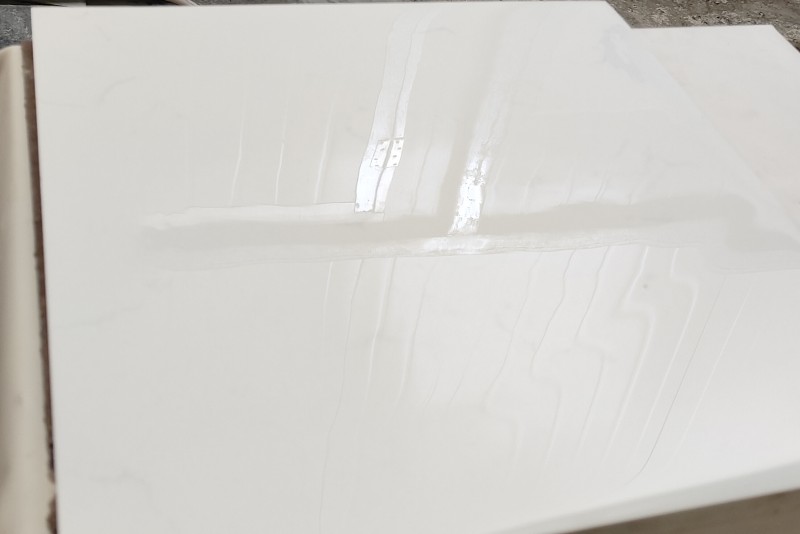
What Tools Do You Need to Polish Quartz Edges
Processors often ask which abrasive works best for specific edge conditions. To answer this question, you must accurately match the tool to the actual condition of the edge. Please refer to the quick reference chart below. This will allow you to easily identify the exact quartz countertop edge polishing tools required for your project.
| Edge Problem / Task | Recommended Tools |
|---|---|
| Rough cut edge | Diamond grinding tool |
| Remove saw marks | Diamond flap disc / grinding tool |
| Shape or bevel the edge | Diamond flap disc / profiling tool |
| Remove grinding scratches | Diamond polishing pad |
| Achieve a smooth finish | Medium-to-fine grit diamond pad |
| Achieve a glossy finish | Fine-grit diamond polishing pads |
| Minor touch-up | Diamond sandpaper |
Diamond Flap Discs for Grinding and Shaping Quartz Edges
When cutting quartz, the raw edge is extremely rough. Therefore, you must quickly remove the excess material. Electroplated diamond flap discs deliver extremely aggressive cutting power. These discs feature exposed diamond particles that bite directly into hard composite materials. As a result, you achieve maximum efficiency without heat buildup or tool clogging.
When to Use a Diamond Flap Disc on Quartz
You should use these flaps immediately after completing the initial cut with a bridge saw. For example, they can easily remove deep saw marks left by the bridge saw. You’ll also need them to quickly chamfer or round sharp edges. Therefore, they are always the premier quartz stone edge polishing tools for heavy material removal.
Why Use a Diamond Flap Disc for Quartz Edges
Traditional grinding wheels often cause chipping on delicate engineered stone materials. In contrast, diamond flap discs provide a much smoother operating. They effectively absorb excess vibration, giving you better control over the edge profile. Additionally, our advanced electroplating technology prevents the diamonds from falling off under heavy loads. As a result, you’ll save significantly on replacement costs over time.
Diamond Polishing Pads for Smoothing and Polishing Quartz Edges
Once you shape the edge profile, you must further refine the surface texture. Diamond polishing pads effectively remove scratches left by the previous grinding. You must use these flexible polishing pads in a strict sequence of grit. Typically, you’ll start with 50 grit and gradually progress to 3,000 grit. This systematic approach gradually builds a high-gloss finish on quartz countertop edges.
When to Switch from Grinding to Polishing
Once the basic edge shape has been perfectly formed, you should switch to polishing pads. Make this transition when only minor surface scratches remain on the stone. For complex curved surfaces or irregular contours, it is recommended to use flexible diamond hand polishing pads to treat hard-to-reach areas. Next, use finer grits polishing pads to achieve a flawless, mirror-like finish.
Diamond Sandpaper for Minor Quartz Edge Finishing
Sometimes, your commercial projects require extremely precise finishing. Diamond sandpaper offers exceptional flexibility when working on fine details. You can easily wrap it around complex contours or use it flat on a sanding block.
When is Diamond Sandpaper Useful
You should use diamond sandpaper when repairing minor edge chips. It’s also ideal for manual deburring tasks on the job site. For example, you can gently sand by hand to soften sharp edges before final installation. Therefore, this abrasive is an essential tool for your final quality control.
How to Choose the Right Quartz Edge Polishing Tool
Choosing the correct quartz edge polishing equipment depends entirely on the current condition of the edge. Follow this practical step-by-step guide to accurately determine your next step.
If the Edge Is Rough After Cutting
Solution: Diamond grinding wheels or diamond flap discs. You need to remove material quickly. Therefore, choose coarse grit electroplated flap discs to rapidly establish a smooth, even surface.
If the Edge Needs Shaping or Beveling
Solution: Diamond louver blades or shaping wheels. You must create a profile that meets architectural design requirements. Flap discs provide precise control, helping you achieve consistent bevels or smooth bullnose edges.
If the Edge Has Visible Grinding Marks
Solution: Diamond polishing pads (coarse to medium grit). You need to eliminate deep gouges left by shaping tools. Therefore, start your polishing process with 50 or 100 grit polishing pads.
If the Edge Is Smooth but Not Glossy
Solution: Fine-grit diamond polishing pads. Your surface requires fine grinding. Next, use polishing pads in sequence from 400 grit to 3,000 grit. This process will successfully restore the factory shine to your quartz edges.
If Only Minor Imperfections Remain
Solution: Diamond sandpaper. You only need to make fine, localized adjustments. Gently rub the specific area with fine grit diamond sandpaper until the imperfections are completely removed.
Safety and Supporting Tools for Quartz Edge Polishing
Polishing quartz produces harmful silica dust. Therefore, you must prioritize workplace safety. Be sure to wear a high-quality respirator, safety glasses, and heavy-duty hearing protection. Additionally, use variable-speed grinders to perfectly control friction heat. Whenever possible, always use a wet polishing system. Water effectively suppresses harmful dust and extends the overall service life of your quartz countertop edge polishing tools.
Conclusion
Achieving flawless finishing results requires high-performance, industrial-grade abrasives. You need reliable tools to efficiently polish quartz edges day after day. Using the right combination of flap discs and polishing pads can eliminate costly rework and boost your profitability.
Z-LION Diamond Tools specializes in designing premium electroplated abrasives for hard composite materials. Our technology ensures exceptional sharpness and zero clogging during operation. If you need to upgrade your existing machining processes, explore our industrial diamond sandpaper and complete abrasives catalog. Request a quote today to get exclusive wholesale pricing for your machining shop.
FAQs
What is the best tool for polishing quartz edges?
The best tool depends largely on the current stage of your project. You’ll need electroplated diamond flap discs for heavy shaping and coarse grinding. Afterward, flexible diamond polishing pads are the best choice for achieving a high-gloss final finish.
Can you polish quartz edges with an angle grinder?
Yes, you can easily use an angle grinder. However, you must use a variable-speed angle grinder for this application. Operating at lower speeds (typically 2,000 to 4,000 RPM) prevents prevents burning the quartz resin.
Should quartz edges be polished wet or dry?
Whenever conditions permit, you should always use a wet polishing process for quartz edges. Wet polishing actively prevents heat buildup, avoids resin burns, and safely suppresses harmful silica dust in your workshop.
Post time: Nov-14-2025