
Professionals frequently use electroplated diamond hand pads to trim edges and polish the surfaces of hard materials like stone, glass, ceramics, and concrete. However, many contractors often face a critical question on job sites: Should diamond hand pads be used wet or dry? Choosing the correct method directly impacts your project efficiency, tool lifespan, and surface finish. Therefore, this article will compare wet vs dry grinding to help you make the right choice based on specific materials and job site conditions.
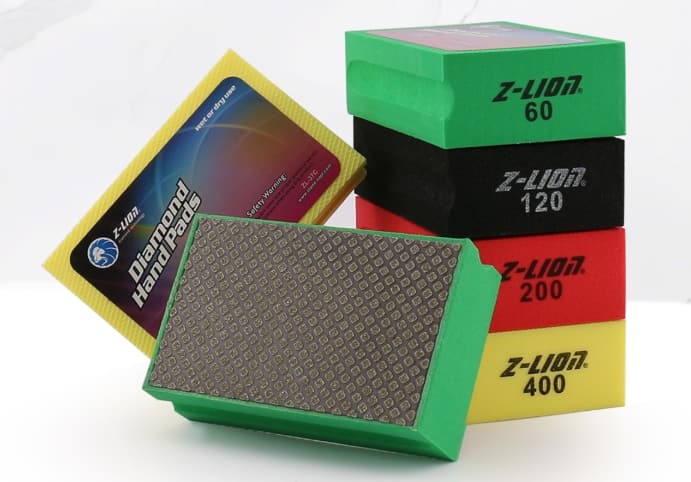
Wet vs. Dry Grinding: What is the Difference
You must understand the basic principles behind these two methods to optimize your workflow. Each method offers unique advantages for specific professional applications.
Wet Grinding with Electroplated Diamond Hand Pads
Wet grinding uses water as the primary coolant and lubricant. Water lowers the working temperatures and washes away loose debris. This method significantly reduces silica dust in the air. Therefore, it serves as the ideal for heat-sensitive materials and strictly regulated environments.
Dry Grinding with Electroplated Diamond Hand Pads
Dry grinding relies entirely on ambient air for heat dissipation. It does not require hoses or water supply equipment. Consequently, it offers unparalleled convenience for quick, localized finishing. However, you must actively manage heat buildup and dust generation during this process.
Wet vs. Dry Grinding at a Glance
Check out this quick comparison chart to understand the key differences:
| Feature | Wet Grinding | Dry Grinding |
|---|---|---|
| Cooling | Excellent (water dissipates heat) | Moderate (relies on ambient air) |
| Dust Control | High (dust is trapped in the slurry) | Low (requires dust extraction) |
| Convenience | Low (requires a water source) | High (available anytime, anywhere) |
| Tool Wear | Slow (less heat stress) | Faster (higher operating temperature) |
| Surface Finish | Smoother, cleaner edges | Good, but requires more cleanup |
| Applications | Heavy removal, heat-sensitive tasks | Quick touch-ups, remote locations |
Should You Use Electroplated Diamond Hand Pads Wet or Dry
Your choice depends directly on your project objectives. Assessing your work environment will help determine the best approach.
Choose Wet Grinding When
You are working with heat-sensitive materials such as glass or quartz.
Your job site requires strict airborne dust control compliance.
You need to remove material continuously and in large quantities.
You want to maximize the service life of your abrasive tools.
Choose Dry Grinding When
Your job site does not have access to a clean water source.
You only need to perform quick, localized edge repairs.
You must avoid leaving messy grinding slurry on the finished workpiece.
You need quick and convenient manual grinding.
Can Electroplated Diamond Hand Pads Be Used Both Wet and Dry
Generally, you should follow the manufacturer’s specific guidelines. However, Z-LION diamond hand pads utilize an advanced nickel electroplated process that firmly anchors the diamond particles. As a result, our standard hand pads are fully compatible with both wet and dry use. This flexibility offers you great convenience on any job site.
Best Practices for Wet Grinding with Diamond Hand Pads
Following the correct operating procedures ensures maximum efficiency. Master the steps below to improve your wet grinding results.
Use Enough Water for Cooling
Keep the work area sufficiently wet to cool the diamond abrasive. However, avoid using too much water. Excessive water will only create a mess and make the workpiece difficult to handle.
Use Controlled Grinding Pressure
Water lubricates the surface, but you must never apply excessive pressure as a result. Allow the extremely sharp diamonds to perform the cutting. Excessive pressure leads to uneven wear and operator fatigue.
Clean the Grinding Slurry Regularly
Wet grinding produces a thick slurry of water and material dust. Therefore, wipe away this slurry frequently. If the slurry dries on the workpiece, it may severely scratch the surface.
Clean and Dry the Hand Pad After Use
After wet grinding, be sure to thoroughly rinse the pad to remove any remaining debris. Next, allow the hand pad to dry completely before storing it. Proper drying prevents the backing material from degrading prematurely.
Best Practices for Dry Grinding with Diamond Hand Pads
Dry grinding requires careful attention to friction. You must actively manage heat to protect your tools.
Avoid Excessive Grinding Pressure
Applying excessive pressure does not result in a faster material removal. On the contrary, excessive pressure can quickly cause intense heat buildup. This leads to premature tool wear and uneven grinding results. Maintain a light, consistent touch.
Prevent Overheating During Dry Grinding
Heat is the greatest enemy when dry grinding with diamond hand pads. Therefore, you must limit continuous working time. Take frequent breaks to allow the hand pad and the material to cool down. Never rub the tool repeatedly in the same place for extended periods.
Control Dust During Dry Grinding
Dry grinding generates hazardous airborne particulates. Be sure to use an appropriate dust extraction system or vacuum. Additionally, wear a high-quality respirator mask to protect your lungs. Always ensure the work area is well-ventilated.
Wet or Dry Grinding: Which is Better for Different Materials
Different materials react differently to heat and friction. Use this guide to select the best wet grinding diamond hand pad solution for your specific substrate.
| Material | Recommended Solution | Main Reason |
|---|---|---|
| Granite | Wet or dry | Depends on cooling requirements and site convenience. |
| Marble | Wet or dry | Allows for precise control of surfaces and edges. |
| Quartz | Carefully controlled grinding | Prone to resin burning from high heat. |
| Glass | Wet grinding preferred | Prevents micro-cracking caused by sudden heat. |
| Ceramics | Wet or dry | Balances edge quality with thermal management. |
| Concrete | Common dry grinding | Offers high convenience for quick localized fixes. |
How to Extend the Life of Electroplated Diamond Hand Pads
Frequent tool replacement can hurt your bottom line. Follow these practical steps to maximize your investment:
Let the diamonds do the cutting on their own; never apply excessive force.
Regularly clean the pad with a stiff brush to prevent material buildup.
Alternate between different areas of the hand pad to ensure even diamond wear.
Store the pad flat in a clean, dry environment, away from direct sunlight.
Conclusion
Gaining a deeper understanding of the dynamics of wet vs. dry grinding ensures you work faster and smarter. Using the correct method protects the materials and extends tool life. If you need a tool with exceptional cutting power and durability, explore our premium electroplated solutions. Our proprietary nickel electroplating process keeps 100% of the diamond particles fully exposed, delivering unmatched sharpness.
Contact our sales team today for a detailed quote and to upgrade your grinding process.
FAQs
Can electroplated diamond hand pads be used wet?
Yes. Wet grinding reduces operating temperatures and strictly controls silica dust. Additionally, water washes away loose debris, which typically significantly extends the service life of the hand polishing pad.
Can electroplated diamond hand pads be used dry?
Yes. High-quality electroplated hand pads can easily handle dry grinding applications. This method is ideal for quick, localized touch-ups when a water source is unavailable or difficult to access on-site. Be sure to monitor heat buildup closely during operation.
Is wet grinding better than dry grinding for diamond hand pads?
There is no absolute better or worse between the two methods. Wet grinding provides excellent heat dissipation and dust control when removing large amounts of material. Conversely, dry grinding offers unmatched convenience for quick, minor edge finishing. Choose the appropriate method based on your specific grinding task and on-site conditions.
Post time: Aug-21-2026