
When grinding or polishing metals and composites, tool downtime eats into your profits. Every minute you spend wrestling with a wrench to change a grinding pad reduces your overall productivity. That’s why professional fabricators rely heavily on Roloc quick change system to streamline their operations. This innovative mounting system allows you to change abrasives in just a few seconds.
In this complete guide, you’ll gain a clear understanding of what the Roloc quick change system is and how it can improve your daily workflow. Additionally, we’ll explore tool compatibility and material applications to help you maximize grinding efficiency.
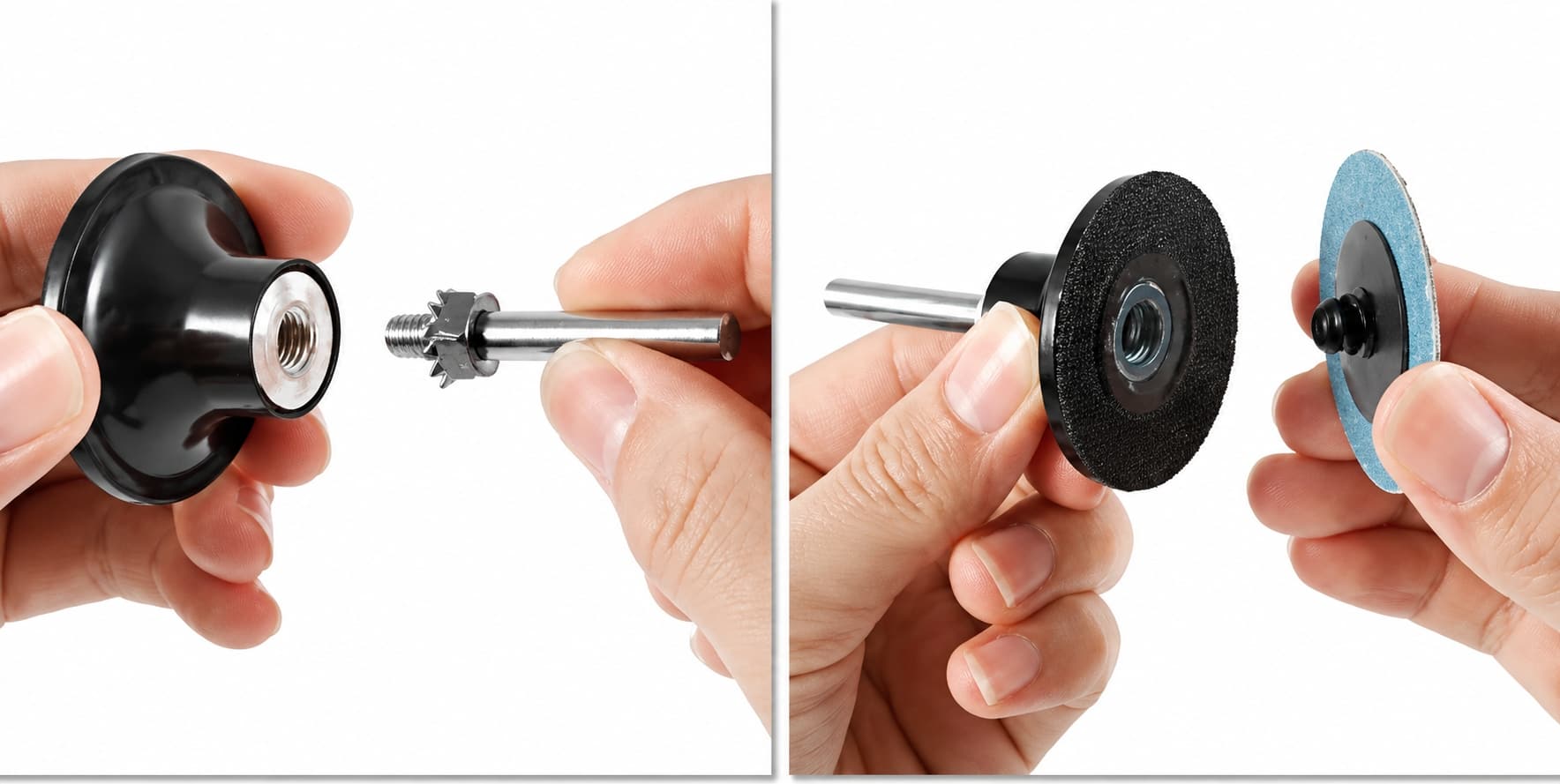
What is the Roloc Quick Change System
The Roloc quick change system is a specialized abrasive attachment mechanism designed specifically for small-diameter grinding discs. Industry professionals commonly refer to it as the Type R quick change disc mount. It utilizes a threaded plastic button permanently attached to the back of the abrasive disc. Consequently, this button locks into a matching female thread on a rubber backup pad.
You do not need any special tools, wrenches, or adhesives to secure the sanding disc. As a result, you can switch from a coarse grinding disc to a fine polishing pad instantly.
How Does the Roloc Quick Change System Work
To understand how Roloc works, you need to look at its simple yet efficient mechanical design. It takes just a quick half-turn to securely lock the abrasive in place.
Components of a Roloc System
The entire setup requires only two main components. First, you need a Roloc backing pad, which serves as the base that attaches to the power tool. Second, you need the Roloc quick change disc itself, which features a threaded male button.
How to Install a Roloc Disc
Follow these simple steps for a safe and quick installation:
First, make sure your power tool is completely turned off and disconnected from the power supply.
Next, align the threaded male connector on the back of the Roloc disc with the center hole of the Roloc support plate.
Then, press the grinding disc firmly onto the base.
Finally, twist the disc clockwise for about one-half to one full turn until it locks tightly into place.
How to Remove a Roloc Disc
Removing the disc is just as simple and straightforward:
Make sure the tool has completely stopped running.
Grasp the edge of the grinding disc firmly.
Twist the disc counter-clockwise sharply to break the threaded seal.
Spin the disc completely off the backing pad.
What are the Benefits of the Roloc Quick Change System
Using the Roloc quick change system delivers immediate benefits to busy machine shops and field contractors.
Faster Disc Changes
Traditional mounting systems require a variety of hand tools to replace a single abrasive disc. In contrast, the Roloc system completely eliminates this need. With a simple twist of the wrist, you can switch between different grits in three seconds.
Secure Attachment During Grinding
Safety is always the top priority during high-speed grinding operations. The threaded design ensures that the grinding disc tightens further as the tool spins. This effectively prevents the disc from flying off at high speeds.
Increased Productivity
Complex projects often require quick switching between abrasive discs of various grits. This quick change system allows you to maintain your work pace. You can seamlessly transition from heavy material removal to surface finishing without interrupting your workflow.
Reduced Tool Downtime
Every second your grinder sits idle costs money. By minimizing tool changeover time, you can significantly reduce overall tool downtime. For continuous machining tasks, this directly translates to higher output and profit margins.
What Tools and Discs are Compatible with the Roloc System
The Roloc quick change system demonstrates incredible versatility across a wide range of tools and abrasive types.
Compatible Power Tools
You’ll typically mount the Roloc backing pad on high-speed, compact power tools. Air die grinders are the most common host tools in metalworking shops. Additionally, as long as you have the appropriate shank adapter, you can easily use them with mini electric grinders and angle drills.
Common Types of Roloc Discs
Manufacturers have produced a wide variety of abrasives using this connection system. Common options include:
Surface conditioning discs for deburring.
Sandpaper discs (aluminum oxide or zirconia) for metal removal.
Non-woven discs for polishing and cleaning.
Flap discs for heavy-duty grinding.
Roloc diamond discs for super-hard materials.
What Materials Can Roloc Discs Be Used On
As long as you select the correct abrasive material, you can process almost any material. Please refer to the compatibility table below to make your selection:
| Abrasive Type | Best For | Notes |
|---|---|---|
| Aluminum Oxide | Mild steel, wood | General purpose sanding |
| Zirconia Alumina | Stainless steel, cast iron | High heat resistance |
| Ceramic | Titanium, hard alloys | Longest life on hard metals |
| Non-Woven | Aluminum, painted surfaces | Surface conditioning without gouging |
| Electroplated Diamond | Fiberglass, carbon fiber, glass | Aggressive cutting, zero clogging |
When Should You Choose a Roloc Diamond Sanding Disc
When machining ultra-hard materials or those prone to dust clogging, standard abrasives fail quickly. In these specific scenarios, you must switch to Roloc diamond grinding discs. For example, when sanding fiberglass, carbon fiber, or wind turbine blades, traditional sandpaper clogs instantly.
However, electroplated diamond discs feature 100% exposed diamond particles. This advanced nickel electroplating process delivers aggressive cutting power and exceptional heat dissipation. As a result, you’ll experience zero clogging and exceptionally long tool life when shaping composite materials, glass, or super-hard coatings.
Final Thoughts
The Roloc quick change system revolutionizes how professionals approach surface preparation and finishing. By eliminating the tool-heavy changeouts, you can keep your abrasives running and efficiently move your projects forward. Choosing the right backing pad and abrasive type ensures you get the most out of your high-speed sander.
If you frequently work with hard composites or hard alloys, standard abrasives will only waste your time and money. Explore our premium electroplated Roloc diamond grinding discs today to upgrade your workflow. Contact our sales team today to request a quote, view technical specifications, or discuss customized OEM abrasive solutions for your facility.
Frequently Asked Questions
Can Roloc grinding discs be used on angle grinders?
Yes, but you must use a specific adapter. Angle grinders typically have an M14 or 5/8″-11 thread, while Roloc backing plates usually feature a 1/4″ shank. You must install a dedicated collet adapter to safely operate small-sized Roloc discs on a standard angle grinder.
How long do Roloc diamond sanding discs last?
They last significantly longer than traditional sandpaper. Because electroplated diamond discs use a rigid nickel bond, the abrasive grains are less likely to fall off. When used on hard composite materials or glass, a single diamond disc can replace dozens of standard aluminum oxide discs.
What is the difference between a Roloc disc and a hook-and-loop disc?
Roloc discs use physical plastic threads that lock securely onto the backing pad. This makes them ideal for high-RPM tasks such as heavy sanding. In contrast, hook-and-loop (Velcro) sanding discs are attached by direct pressure. Therefore, the hook-and-loop system is generally better suited for low-speed orbital sanding and fine polishing.
Post time: Sep-23-2026