
Are you wondering when to use flap discs or flap wheels during surface finishing? Choosing the right abrasive tool directly impacts your project’s efficiency, surface finish, and cost-effectiveness. Professionals in the industrial often face this dilemma when performing metal fabrication, composite shaping, or surface finishing. Therefore, understanding the structural differences between these two abrasive tools is crucial.
In this guide, you’ll learn how to evaluate application and make the right tool selection. By choosing appropriate electroplated diamond flap products, you can reduce costly downtime and prevent workpiece damage. Let’s dive into the details so you can select the perfect tool for your next project.
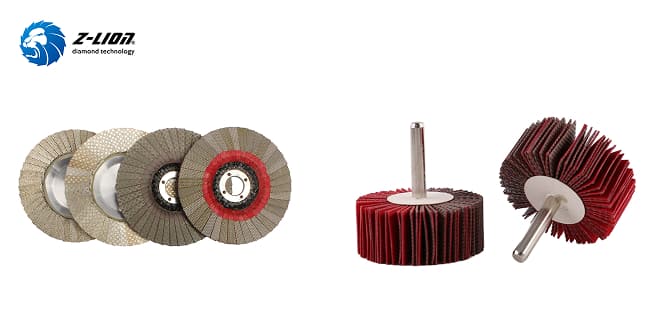
What is a Flap Disc
A flap disc is a highly efficient and rigid abrasive tool. Professionals primarily mount it on angle grinders for use. Manufacturers overlap multiple rectangular abrasive flaps and secure them directly to a sturdy backing plate using industrial adhesive. During the grinding process, as the abrasive wears down, the cloth backing also wears away. Consequently, this continuous abrasion constantly exposes fresh, sharp diamond grains. This unique design ensures that the tool maintains consistent and powerful cutting performance throughout its entire service life.
Structure and Design of the Blade
The structure of a flap disc consists of three core components: the backing plate, industrial adhesive, and abrasive flaps. The rigid backing plate provides stability. It effectively absorbs heavy vibrations during rapid material removal. Typically, manufacturers use fiberglass, durable plastic, or aluminum. In addition, flap discs feature specific contour shapes. For example, you can use a Type 27 (flat) disc for smooth surface transitions. Conversely, you can choose a Type 29 (conical) disc for highly aggressive material removal.
What is a Flap Wheel
In contrast, flap wheels (also known as shank-mounted flap wheels or multi-flap wheels) have a completely different physical structure, designed specifically for certain tasks. You’ll notice that the abrasive flaps on a flap wheel are radially mounted on a central hub. Unlike flat flap discs, flap wheels are shaped more like a small drum or cylinder. Typically, operators use the included metal shank to mount these tools on straight grinders, bench drills, or vertical pneumatic tools.
Structure and Design of Flap Wheels
The structure of the flap wheel allows it to compress and conform to uneven surfaces. Manufacturers securely fasten the base of each abrasive flap to a central steel core. As a result, the outer edges remain completely flexible. This high flexibility makes flap wheels ideal for internal polishing and intricate contouring. When working on the inner diameters of pipes, this flexible design offers unmatched adaptability.
Flap Disc vs. Flap Wheel: What are the Differences
To fully understand when to use a flap disc or a flap wheel, you must compare their core physical properties. The comparison table below lists the main differences in their applications. Use this quick guide to assess your tooling needs.
| Features | Flap Disc | Flap Wheel |
|---|---|---|
| Main Power Tools | Angle Grinder | Die grinders, bench grinders |
| Focus on contact surfaces | Flat surfaces, outside edges | Curved surfaces, inside tubes |
| Tool flexibility | Rigid, with minimal surface give | High flexibility, able to conform to the shape |
| Material Removal Rate | High, highly aggressive cutting | Medium to low, excellent surface transition |
| Best Applications | Heavy deburring, weld grinding | Internal polishing, rust removal |
When Should You Use a Flap Disc
Determining when to use flap wheel or flap disc depends on the specific geometry of your workpiece. When you need to remove a significant amount of material from flat, open surfaces, you should choose flap disc. For example, flap discs are ideal for quickly grinding heavy welds on thick steel plates. In addition, they are perfect for rapid edge chamfering and heavy surface leveling.
If you’re working extremely hard and brittle materials such as fiberglass or high-performance composites, our high-cutting-force electroplated diamond flap discs deliver impressive material removal without clogging. Finally, when the need for high processing speeds and heavy cutting outweighs the need for tool flexibility, choose rigid flap discs.
When Should You Use a Flap Wheel
Conversely, when deciding to use a flexible flap wheel, you must evaluate the complex geometry of the workpiece. You should use a flap wheel when your workpiece has complex curves, irregular contours, or internal cylindrical features. For example, finishing the inside of a metal pipe requires a specialized tool that fits inside the narrow cavity. Flap wheels can easily reach into these confined spaces.
In addition, these drum-shaped wheels provide a gentler touch when it comes to final surface transitions and grain matching. Therefore, use this flexible tool when maintaining dimensional tolerances on complex-shaped parts is a top priority.
Safety Tips for Using Flap Discs and Flap Wheels
In industrial surface finishing environments, safety always comes first. There are inherent physical risks associated with operating any rotating abrasive tool. Please use this actionable safety checklist to protect yourself and your production team.
Wear Proper PPE
You must always wear the correct personal protective equipment (PPE) before starting the grinder. Protect your eyes with high-impact safety glasses or a full face shield. Additionally, wear heavy-duty leather work gloves to protect your hands from hot sparks and sharp metal edges. Finally, when grinding composite materials that produce harmful dust, use an industrial respirator.
Match Tool Speed Ratings
Never exceed the maximum safe RPM indicated on the abrasive wheel. First, check the RPM rating clearly printed on the angle grinder or straight grinder. Next, verify that the maximum safe speed of the flap disc is safely higher than the machine’s operating speed. Running a disc that is not rated for the required speed will result in catastrophic tool failure.
Inspect Abrasives Before Use
Before installation, you should carefully inspect each grinding wheel visually. Look closely for loose flaps, cracked fiberglass backing, or bent metal shanks. Discard any damaged or used tools immediately. This quick daily inspection can prevent dangerous workplace accidents caused by unbalanced grinding wheels.
Use the Correct Grinder
Always mount grinding wheels on the specific machines for which they are designed. Never force large flap wheels onto a grinder if it lacks the appropriate safety guard. Similarly, ensure that the chuck on a straight grinder securely clamps the entire metal shank of the flap wheel. Ultimately, using the wrong tool setup can seriously compromise the operator control and workshop safety.
Conclusion
In summary, knowing exactly when to use a flap or a flap wheel will determine the success or failure of your entire project. You must use flaps for powerful, flat surface grinding and heavy material removal. Conversely, rely on flexible flap wheels for fine interior polishing and complex curved contour machining.
Using the correct abrasive tools maximizes production efficiency and significantly reduces material waste. For professionals machining difficult composites, ceramics, or hard metal coatings, standard abrasives often clog easily and fall short. Z-LION electroplated diamond abrasives never clog and deliver ultimate cutting efficiency. Ready to upgrade your industrial surface finishing process? Consult our technical experts today and get a customized quote to find the perfect diamond abrasive solution for your needs.
Frequently Asked Questions
Is a flap disc more aggressive than a flap wheel?
Yes, a flap disc typically deliver much greater cutting force. Manufacturers build them onto rigid backing plates, specifically designed to withstand high-pressure, downward-force applications. As a result, they remove heavy stock and thick welds faster than flexible diamond flap wheels.
Can flap discs and flap wheels be used interchangeably?
No, you cannot use them interchangeably. They require completely different power tools to operate safely. Angle grinders drive flat flap discs, while straight grinders or straight drills drive cylindrical flap wheels. Additionally, they are designed for completely different workpiece geometries.
How long do flap discs and flap wheels last?
The service life of a tool depends entirely on the selected abrasive material, the pressure applied by the operator, and the hardness of the workpiece. However, electroplated diamond flap tools have a longer service life than traditional aluminum oxide or silicon carbide alternatives and offer faster cutting speeds.
Do diamond flap discs work on ceramic and glass?
Yes, electroplated diamond flap disc perform well when machining ceramics, glass, and fiberglass composites. The fully exposed diamond grains provide exceptional sharpness. As a result, they can easily shape and finish hard, brittle materials without clogging.
Post time: Jun-25-2026